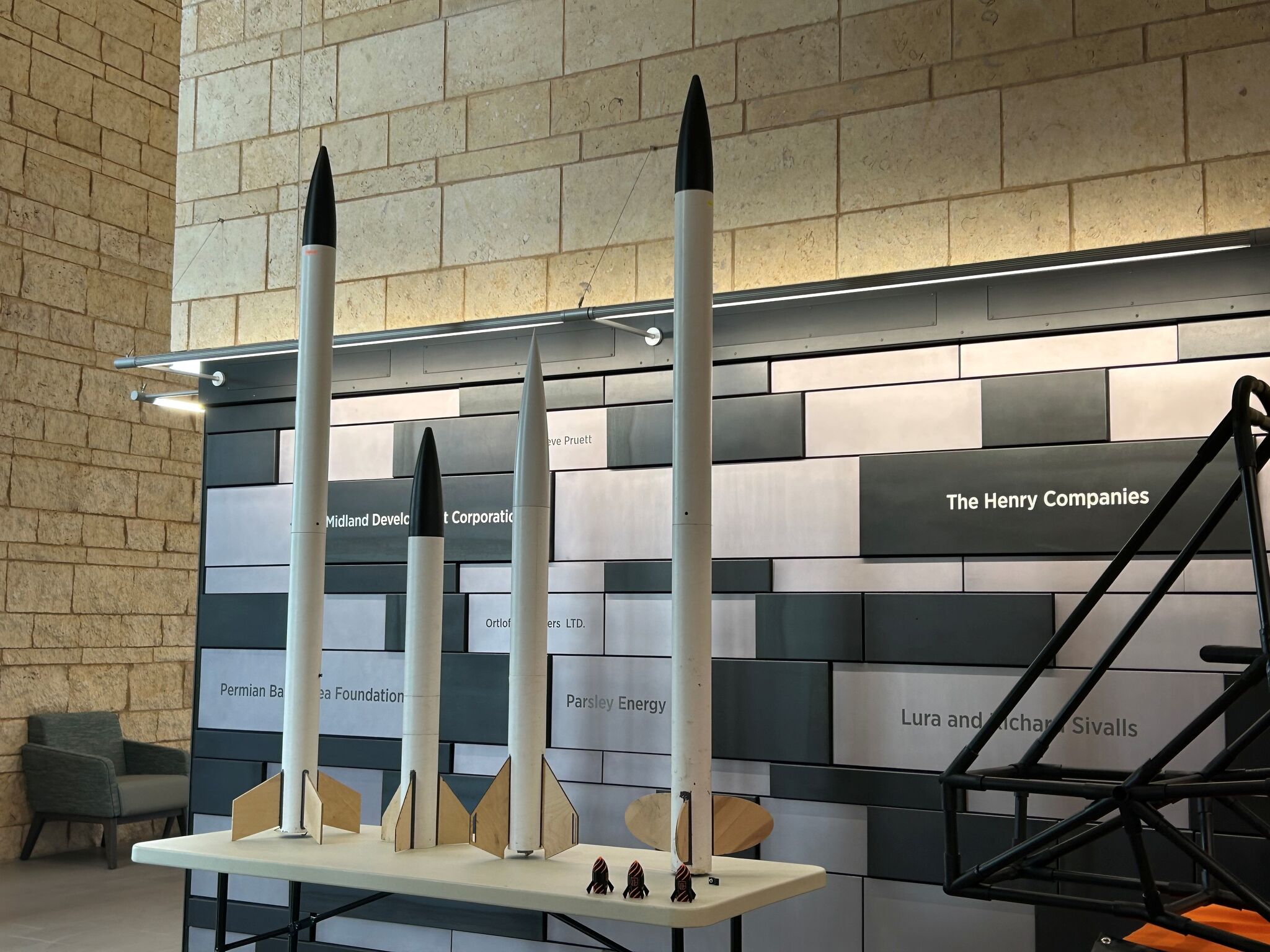
Midland officials and industry advocates used a June 15 workshop to promote the city as a space-economy hub, citing aerospace infrastructure, workforce skills and a $5 million Texas Space Commission grant for a vertical launch site.
Midland officials and aerospace advocates are trying to turn the Permian Basin city’s energy legacy into a broader space-economy strategy.
At a June 15 aerospace workshop, Mayor Lori Blong and other local and industry leaders argued that Midland can build on its infrastructure, workforce and industrial know-how to attract more aerospace and defense activity. The event was part of a longer effort to position the city as a West Texas base for space-related work.
Blong said Midland’s experience in power generation, heat capture and water capture gives the city an advantage. She said those skills, built in the oil-and-gas industry, can transfer to the technical demands of aerospace development.
The pitch comes as Midland continues to promote aerospace expansion through local economic-development efforts. Earlier Midland Reporter-Telegram reporting described deals involving Castelion Corp. and AST SpaceMobile as part of that broader push.
Building the case
The Midland Development Corp. has been working with the Space Force Association for roughly 18 months to better understand how Midland can position itself in the space economy, according to association CEO Damon Feltman.
Feltman said the city already has pieces of a space-economy ecosystem because of its aerospace infrastructure and manufacturing base. He also pointed to the size of the market, saying the global space economy could reach $1.8 trillion by 2035, including $600 billion in the United States.
The workshop was designed to turn that argument into local momentum. Midland leaders are trying to show that the city can compete for aerospace work beyond its traditional identity as an energy center.
Grant-backed plans
The June workshop builds on a $5 million Texas Space Commission grant tied to a vertical rocket launch facility. Midland International Air and Space Port received the funding in 2025 for a commercial vertical launch site planned in Reeves County.
The site is described as requested and managed by the city of Midland but located in Balmorhea, in Reeves County. The project was presented as a complement to Midland’s horizontal launch and hypersonic flight corridor efforts.
State support matters because the launch project is part of a wider Texas effort to grow the space industry. The Texas Space Commission has used its grant program to back inland launch-pad studies and other space-infrastructure projects across the state.
The Houston Chronicle reported in February that the commission’s first $150 million in grants funded 24 projects, including inland launch-related work and other infrastructure tied to the space economy. That places Midland’s ambitions within a broader state policy push rather than a standalone local proposal.
What Midland has already built
Midland’s aerospace push did not begin with the June workshop. The city has spent several years trying to diversify beyond oil and gas by building a space and aerospace cluster around the Midland International Air and Space Port.
Earlier Midland Reporter-Telegram reporting said Midland Development Corp. was already advancing aerospace and defense expansion through deals involving Castelion and AST SpaceMobile. Those agreements show the city has been laying groundwork before the latest promotional effort.
Local officials have also tried to market Midland’s industrial base as an asset. The argument is that the same know-how that supports energy production can also support aerospace manufacturing, testing and launch-related services.
Why the effort matters
The stakes are economic as much as symbolic. Midland officials want to turn a promotional campaign into jobs, manufacturing activity and infrastructure investment that can diversify the local economy.
That matters in a city long tied to oil and gas. If the space-economy strategy works, it could create a new industrial identity without replacing the old one.
It also matters for Texas, where inland launch and space-infrastructure projects are increasingly a policy topic. West Texas is being marketed as a practical location for launch and testing because of its large airspace and lower population density.
For Midland, the question is whether that statewide interest can translate into local gains. The city is trying to move from being a place that talks about space to one that hosts actual aerospace work.
What happens next
The open question is how much additional funding is still needed to fully build the vertical launch facility and when it could become operational.
City leaders and the Midland Development Corp. will also be looking for concrete follow-through from the workshop, including agreements, land deals, workforce initiatives or company commitments that show the pitch is producing results.
Watch for further Texas Space Commission action, progress on the Reeves County site and any signs that aerospace or defense companies are preparing to expand in Midland. Those developments will show whether the workshop was mainly promotional or the start of a more tangible buildout.
For now, Midland is presenting itself as a city that wants to convert energy-industry expertise into space-industry growth. The workshop was the latest attempt to make that case publicly, with state funding and prior aerospace deals providing the backdrop.
Revision note
Initial automated publication.