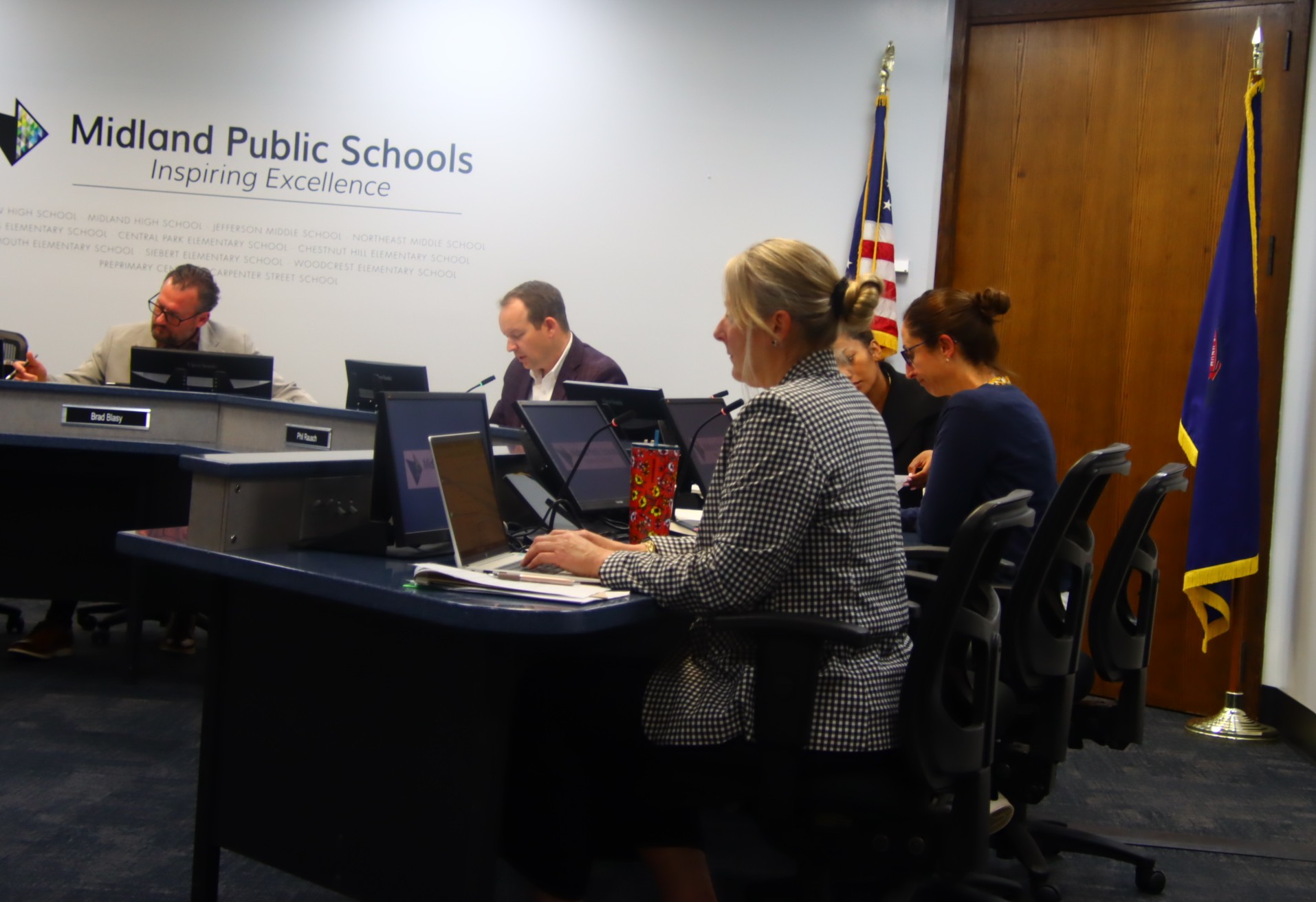
Midland Public Schools’ board failed to approve its 2026-27 budget after a 3-1 vote fell short of the four approvals needed from the seven-member board. The proposed budget carries a $12.8 million deficit, and trustees will vote again at a June 29 special meeting before the July 1 fiscal year begins.
Midland Public Schools’ board failed to approve its 2026-27 general operating budget on June 15, leaving the district to try again before the new fiscal year begins July 1.
The proposed budget carries a projected deficit of $12,803,442. The seven-member board voted 3-1 in favor, but the budget needed four affirmative votes to pass.
Board President Phil Rausch and trustees Brad Blasy and Ann Horowitz voted yes. Trustee Meki Craig voted no. Vice President Scott McFarland, Secretary Jennifer Ringgold and Treasurer Jon Lauderbach were absent.
The board has scheduled a special meeting for June 29 at 4 p.m. to take another vote.
Why the vote mattered
The failed vote leaves Midland Public Schools without an approved operating budget as the July 1 fiscal year start approaches. Superintendent Penny Miller-Nelson said the district needs an approved budget in place to remain compliant.
That makes the June 29 meeting a deadline-driven step in the district’s budget process, not just another routine reconsideration. If trustees do not reach the required threshold, the district will remain under pressure to settle its spending plan before the fiscal year turns over.
The June 15 meeting also included a facilities planning workshop tied to future funding proposals for district infrastructure, showing that the budget discussion is connected to longer-range capital planning as well as immediate operations.
What the district says about the shortfall
In a community message released June 16, Miller-Nelson said the district expects about a $13 million deficit. That figure is consistent with the public report’s more precise estimate of $12.8 million.
She said the district expects state funding to decline by 7.7%, adding pressure to the 2026-27 budget. The superintendent also said the district has reserve funds available and expects a fund balance just under 16% of expenditures.
That reserve level is above the board’s 12% policy minimum, according to Miller-Nelson. District leaders said that position should help the district absorb the shortfall for now and minimize immediate impact on students and classrooms.
The combination of a deficit budget and reserve use is central to the district’s current planning. The board has signaled that it can cover the gap, but it has not yet reached the procedural approval needed to put the spending plan in place.
Broader budget context
The district was already planning around a deficit budget before the June 15 vote, but the shortfall in the current proposal is larger than originally expected. Midland Public Schools has been working through the 2026-27 spending plan while state funding assumptions remain unsettled.
That timing gap matters because school districts often have to finalize budgets before all state decisions are fully clear. In Midland’s case, the superintendent’s warning about a 7.7% decline in state funding suggests the district is bracing for less revenue than it would like as it sets staffing and program priorities.
The district’s broader facilities-planning work adds another layer. Future funding proposals for infrastructure remain tied to the same budget process, meaning the current operating budget and long-term capital planning are moving in parallel rather than as separate discussions.
What happens next
The next formal test comes June 29, when trustees are scheduled to vote again at a special meeting. The board will need to secure the required four affirmative votes to approve the budget.
Until then, district officials are expected to keep updating the community on budget adjustments and revenue assumptions. State budget decisions could also affect how much money Midland Public Schools ultimately expects to receive.
For now, the immediate issue is compliance: the district needs an approved budget before the July 1 fiscal year start. The June 29 meeting will show whether trustees can bring the spending plan across the finish line or whether the district will need more time to resolve the gap.
The failed vote also leaves open how the board will continue balancing reserves, projected state aid declines and facilities planning as it works toward a final 2026-27 budget.
Revision note
Initial automated publication.