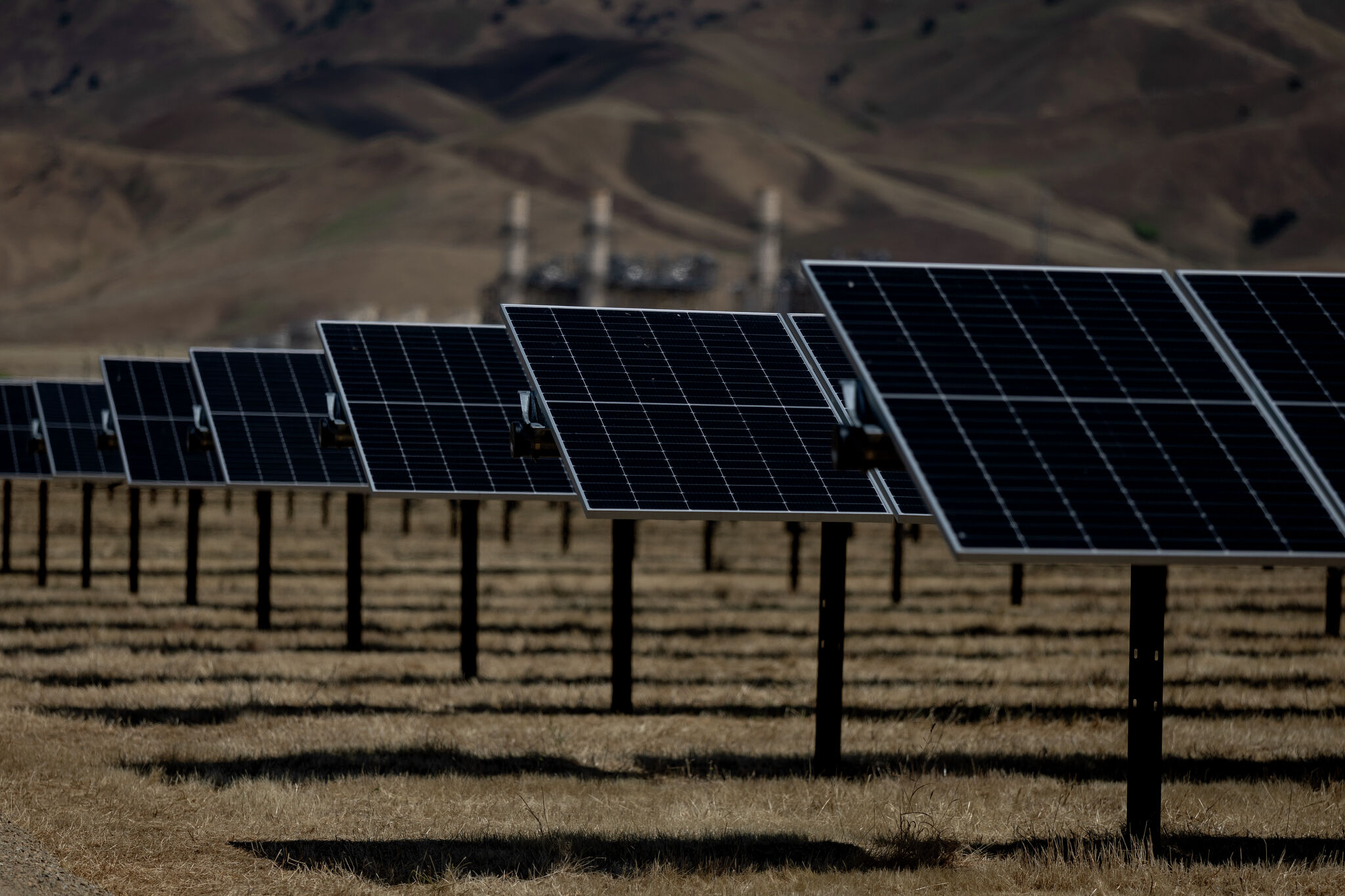
More than 70 Michigan municipalities are asking the state Supreme Court to review a dispute over renewable-energy siting, arguing the state Public Service Commission went beyond its authority under Public Act 233.
More than 70 Michigan municipalities are asking the state Supreme Court to take up a dispute over who controls the siting of large renewable energy projects, arguing that state regulators went beyond the authority given to them under Public Act 233.
The request for leave to appeal was filed on June 18 and reported publicly on June 29. It seeks review of a Michigan Court of Appeals decision in Almer Charter Township et al. v. Michigan Public Service Commission.
At stake is a basic question with broad practical consequences: when a local renewable-energy ordinance does not satisfy state standards, how much control do municipalities keep over wind, solar and battery-storage projects, and how much power belongs to the Michigan Public Service Commission?
What the municipalities say
The municipalities say the PSC exceeded its authority when it implemented Public Act 233 and when it interpreted the law in a way that narrowed local control over renewable siting.
Their appeal argues that the commission constrained what qualifies as a compatible renewable energy ordinance, which in turn reduced the ability of local governments to keep approval authority over projects in their communities.
The filing also challenges the PSC's creation of a “hybrid facilities” category for projects that could qualify for state approval. The municipalities contend that the commission did not have authority to add that category.
The appeal was filed by Foster Swift Collins & Smith, PC.
How the dispute developed
Public Act 233 was enacted in 2023 and created a state-level permitting path for certain large renewable energy projects. The law shifts some approval authority away from local governments when ordinances do not meet state requirements.
Compatible renewable energy ordinances are central to the case because they determine whether a municipality keeps control over project siting or whether the state can step in.
According to the reporting, the PSC later issued an implementation order and adopted rules that the municipalities say narrowed that local authority more than the statute allows.
The Court of Appeals previously sided with the municipalities on notice and deadline issues, but the current filing asks the Supreme Court to examine the broader question of statutory authority and how the law should be applied.
Who is involved
The reported filing says 72 townships and seven counties joined the original Court of Appeals challenge, and another 43 townships and counties later adopted resolutions supporting the lawsuit.
Among the appellants is Almer Charter Township, which appears in the case caption. The dispute also places the Michigan Supreme Court, the Michigan Court of Appeals and the Michigan Public Service Commission at the center of the same legal fight.
The municipalities are not only contesting a single project or one local ordinance. They are challenging the framework that will govern future approval of utility-scale renewable projects across Michigan.
Why it matters
The practical stakes are high for local governments that want more say over land use. If the PSC's interpretation stands, state permitting could override local rules in more cases where a municipal ordinance does not satisfy the state standard.
That could affect how communities handle proposals for wind, solar and battery-storage facilities. The case is therefore part of a wider fight over zoning authority and the balance between local control and state oversight.
The outcome could also shape how Public Act 233 is understood and enforced going forward. A Supreme Court review, if granted, could reset how compatible ordinances are evaluated and how much room municipalities retain to regulate siting.
What happens next
The immediate question is whether the Michigan Supreme Court will agree to hear the case. A filing for leave to appeal does not guarantee review.
If the court grants the appeal, the case could become a major test of the state's renewable-siting framework. If it declines, the Court of Appeals decision will remain in place.
For now, the June 18 filing is the latest escalation in a continuing legal and political battle over who controls where renewable-energy projects can be built in Michigan.
Revision note
Expanded initial publication with full chronology, actors, legal stakes, and next steps.