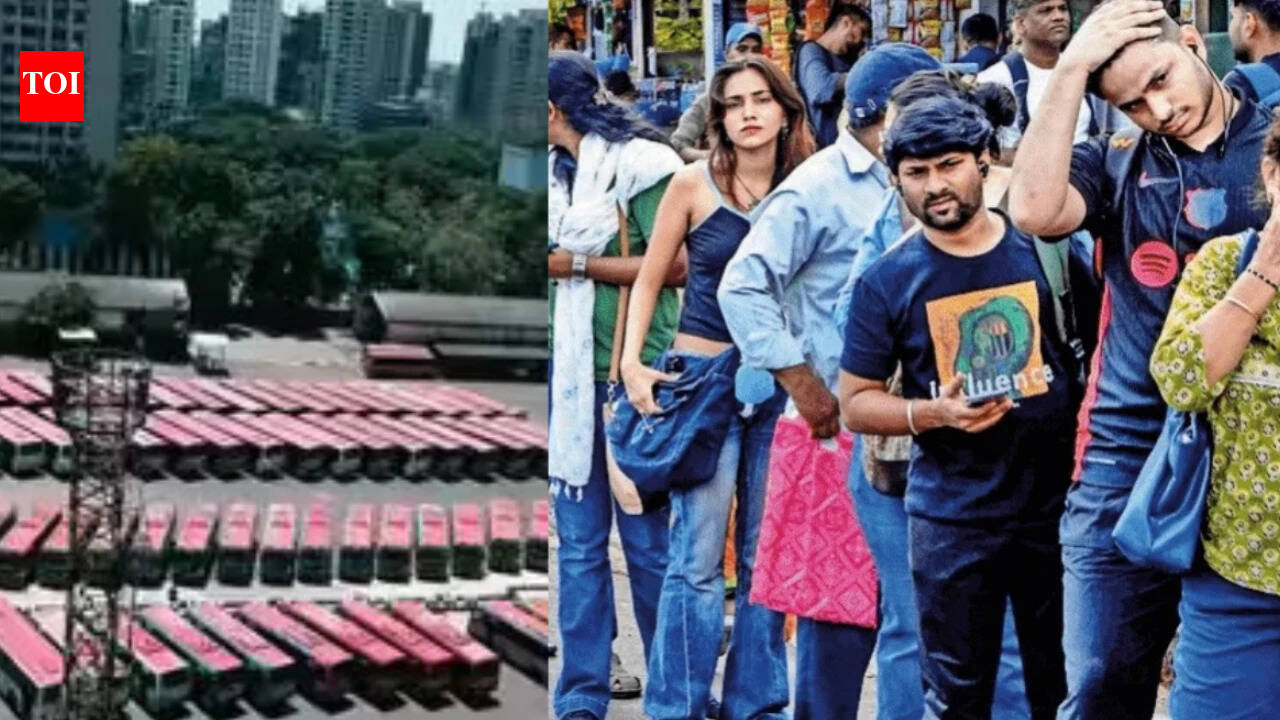
Mumbai’s BEST strike entered its third day on June 21, 2026, with MSRTC deploying buses to help ease the disruption. The move also supported NEET exam travel, while authorities invoked MESMA and a committee was set up to examine workers’ demands.
Strike enters day three
Mumbai’s BEST bus strike entered its third day on June 21, 2026, leaving one of the city’s most important public transport systems severely disrupted and forcing the Maharashtra State Road Transport Corporation to step in with extra buses.
BEST said the strike had sharply thinned staffing across its operations. By Saturday afternoon, only 37 of 3,076 scheduled drivers and 11 of 4,705 conductors had reported for duty, while none of the 1,694 scheduled wet-lease conductors had come in and only nine wet-lease drivers had reported.
MSRTC steps in
To keep commuters moving, BEST had asked MSRTC to provide 100 buses. On Sunday, MSRTC supplied 100 buses to BEST, and Times of India reported that 60 of them were used to ferry students appearing for the NEET exams.
Maharashtra Times also reported that MSRTC put additional state transport buses into service as the disruption deepened. The deployment was meant to soften pressure on a system already under strain from the strike.
Exam-day disruption
The strike created a separate problem for students sitting the NEET exam in Mumbai. BEST said it had operated 60 special buses on Saturday for candidates travelling to 63 examination centres.
That made exam transport one of the clearest immediate effects of the labour dispute. The city’s transport managers were trying to balance normal commuter movement with the added demand of exam-day travel.
Why workers are striking
The BEST Joint Workers Action Committee said the strike was driven by long-pending demands over salaries, terminal benefits, dues for retired employees, a 2016-26 wage agreement and better service conditions for wet-lease staff.
Earlier reports said the unions had announced the strike from June 19, with demands that also included regularisation of contractual workers, 5,000 BEST-owned buses and a merger of BEST and BMC budgets. The dispute has become a wider test of how the civic undertaking balances costs, staffing and public service.
Government response
BEST general manager Sonia Sethi said the undertaking was taking measures to maintain essential services and minimise commuter inconvenience. BEST also invoked the Maharashtra Essential Services Maintenance Act and issued notices to striking employees and wet-lease contractors.
A transport-minister meeting produced minutes saying a three-member committee would examine the employees’ demands and submit findings within a week. The minutes also said a further meeting in the presence of Deputy Chief Minister Eknath Shinde would be held during the monsoon session, after which a final decision would be taken.
What happens next
The immediate questions are how long MSRTC support will continue, whether BEST can restore more services, and whether the committee’s review leads to any interim settlement.
For now, Mumbai commuters remain caught between an unresolved labour dispute and emergency transport arrangements designed to preserve basic mobility during the strike.
,Revision note
Initial automated publication.