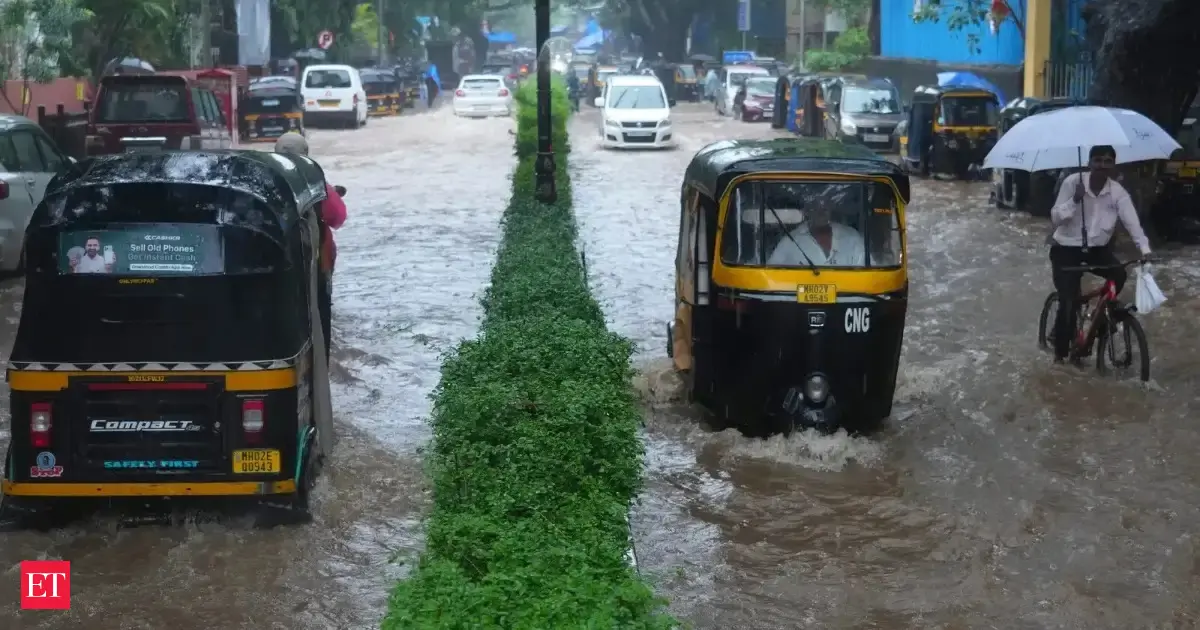
Mumbai saw heavy rain and waterlogging on July 2, with reports of transport disruption and conflicting IMD alert levels as authorities warned of tide and wind risks.
Mumbai was hit by heavy showers on Thursday, July 2, bringing waterlogging, traffic disruption and renewed concern over flooding in low-lying parts of the city.
Reports on the alert level were mixed. One account said the India Meteorological Department issued a red alert for Mumbai and adjoining districts, while another same-day report said the agency had issued an orange alert for Mumbai, Raigad, Palghar and Thane. Until an official bulletin is confirmed, the alert should be treated cautiously.
The rain added to disruption that had already begun a day earlier. On July 1, local coverage said heavy showers delayed suburban trains, slowed road traffic, diverted at least three flights and flooded low-lying areas in Mumbai, Thane and Palghar.
Live impact across the city
By Thursday morning, waterlogging had been reported in areas including Andheri, Kings Circle and Gandhi Market. One report said rainfall totals reached 134 mm in the city, 164 mm in the eastern suburbs and 149 mm in the western suburbs.
The Brihanmumbai Municipal Corporation also warned of high tide and gusty winds, adding another layer of risk for streets already dealing with standing water.
Travel and commuter fallout
The immediate impact was felt by commuters, rail passengers and airline travelers. Earlier coverage on July 1 said suburban trains were delayed and flights were diverted as rain intensified across the Mumbai Metropolitan Region.
Road traffic was also moving slowly, especially in areas prone to flooding. Neighboring Thane and Palghar reported widespread waterlogging as the rain band expanded beyond the city.
What forecasters and officials are watching
The broader weather outlook remains unsettled, with earlier IMD-based reporting warning of more showers across Mumbai and the Konkan belt into July 2 and beyond.
The key questions now are whether the rainfall eases, whether the official alert level is confirmed or updated, and how much more disruption the city faces if high tide overlaps with continued heavy rain.
For commuters and residents in flood-prone neighborhoods, the immediate focus remains on road conditions, rail service, aviation delays and local civic advisories.
Revision note
Initial automated publication.