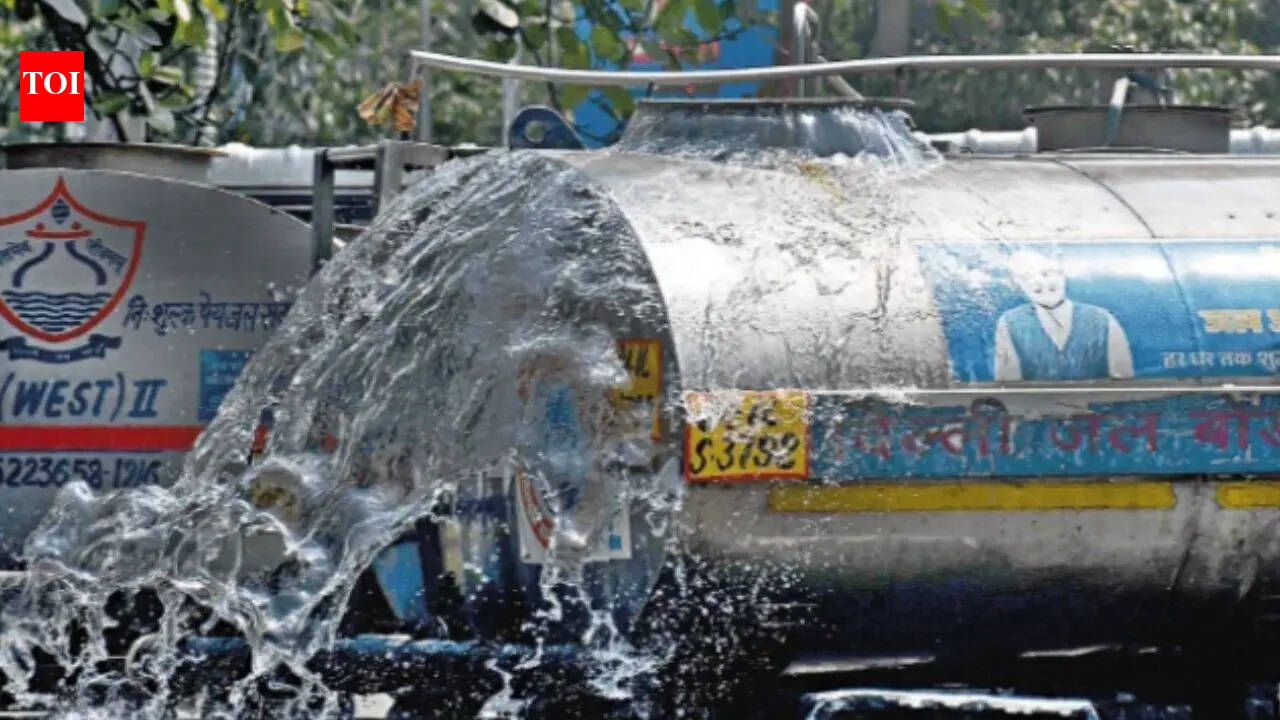
Delhi Jal Board tankers at the Gulabi Bagh filling point were reported spilling water while being loaded for shortage-hit localities, raising questions about tanker oversight and wastage during a water crisis.
Delhi Jal Board tankers meant for shortage-hit neighbourhoods were reported spilling thousands of litres at the Gulabi Bagh filling point in north Delhi, turning part of the supply chain for parched localities into a source of waste.
The incident, reported on June 13, showed water overflowing while tankers were being filled, with runoff pooling on the ground and leaving the area muddy and waterlogged. According to the report, the wastage was happening before the tankers even left the station.
What the report says
The tankers are used to deliver water to localities facing shortages across the city. Instead, the filling point itself was losing water during dispatch, reducing the efficiency of a system already under pressure.
The report said the overflow was visible at the site and suggested that the wastage was continuing during the loading process rather than after delivery.
Why it matters
The spill comes at a time when Delhi continues to rely on tanker supply to cover a wider water gap. A Delhi government review in March said the city was working under a supply deficit, with about 1,000 million gallons a day available against demand of 1,250 MGD.
That review also said the administration had launched a Summer Action Plan 2026, including GPS-based tanker monitoring and a mobile app intended to track movement and improve transparency. It said 987 tankers had been deployed, with room to hire 200 more if needed.
The Gulabi Bagh spill raises questions about operational control at filling points, oversight of tanker dispatch and how much relief water is being lost before it reaches residents.
What happens next
There was no immediate indication in the report of a formal response from Delhi Jal Board or the water ministry on the cause of the overflow. The key unanswered questions are whether the problem is isolated to one filling point or reflects a wider tanker-management issue, and whether any corrective action has been taken.
The episode will likely intensify scrutiny of the capital’s tanker-based relief system, especially if the government is already relying on GPS tracking and tighter monitoring to make summer water supply more efficient.
Revision note
Initial automated publication.