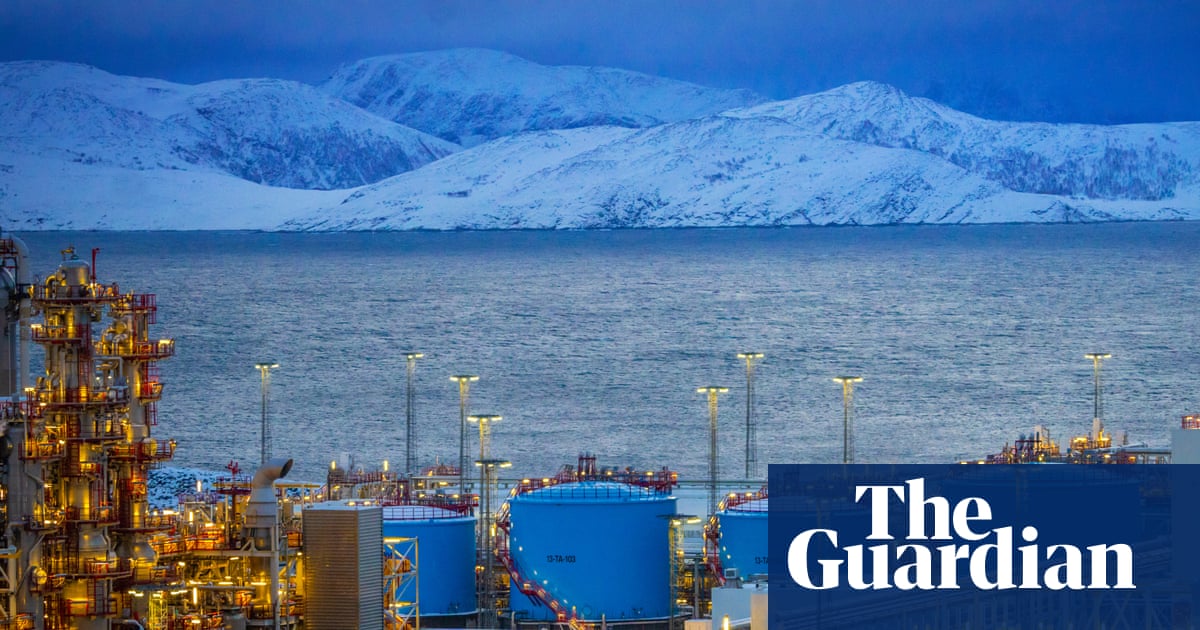
Norway’s prime minister has challenged the EU’s Arctic drilling stance, arguing that Norwegian gas from the High North should not be treated as less safe than imports from the US or Gulf states. Brussels is updating its Arctic strategy as Europe weighs energy security against climate concerns.
Norway’s prime minister has challenged the EU to explain why gas from the US or Qatar should be treated as safer than supply from Norway’s Arctic reserves, in a fresh dispute over energy security and Arctic drilling policy.
Jonas Gahr Støre said Norway increased gas exports to the EU after Russia’s full-scale invasion of Ukraine, and that much of the extra supply came from the Arctic, including LNG from Hammerfest. He argued that the EU’s position against new oil, coal and gas extraction in the Arctic was not fit for current security conditions.
The remarks, reported by the Financial Times on Friday, come as the European Commission reviews its Arctic strategy and considers whether to drop its moratorium on new Arctic drilling. The Commission is said to be updating the policy in light of the geopolitical and geoeconomic situation while keeping sustainability objectives in place.
Energy security meets Arctic policy
Norway has long presented its oil and gas industry as part of Europe’s energy-security architecture. That argument has gained force since 2022, as European countries scrambled to replace Russian gas and Norway became one of the bloc’s most important suppliers.
Støre’s intervention pushes that logic further. Instead of treating Arctic production as a climate liability by default, he is asking Brussels to weigh whether imports from farther afield, including the US and Gulf states, are truly safer for Europe than Norwegian supply.
The policy clash also exposes a long-running tension inside the EU. Its Arctic posture has traditionally emphasized environmental protection, sustainability and international cooperation. But the war in Ukraine and instability in the Middle East have made security arguments harder for Brussels to ignore.
Norway’s wider push
The latest comments fit a broader Norwegian effort to defend continued oil and gas production. In May, Oslo approved plans to reopen three closed North Sea gasfields and open new exploration areas, explicitly citing Europe’s energy security. A separate Norwegian government message from the same period framed sustained oil and gas output as a contribution to Europe’s security needs.
That backdrop matters because Norway is western Europe’s largest gas producer and a major supplier to the EU. The country wants easier political acceptance, and potentially more room for financing, for Arctic and other upstream projects.
Environmental opposition inside the EU is likely to remain strong. Critics see any relaxation of Arctic restrictions as hard to square with climate goals and the ecological sensitivity of the region.
For now, the key question is whether Brussels will actually alter policy or simply soften the language around it. The Commission has yet to signal a final decision, and any change would have to navigate both member-state politics and objections from green lawmakers and campaigners.
The immediate test is whether Norway’s argument that Arctic gas is strategically preferable gains traction in European capitals. If it does, the EU’s Arctic policy could move from a primarily climate-led framework toward a more security-led one; if it does not, the current moratorium is likely to stay in place.
Revision note
Initial automated publication.