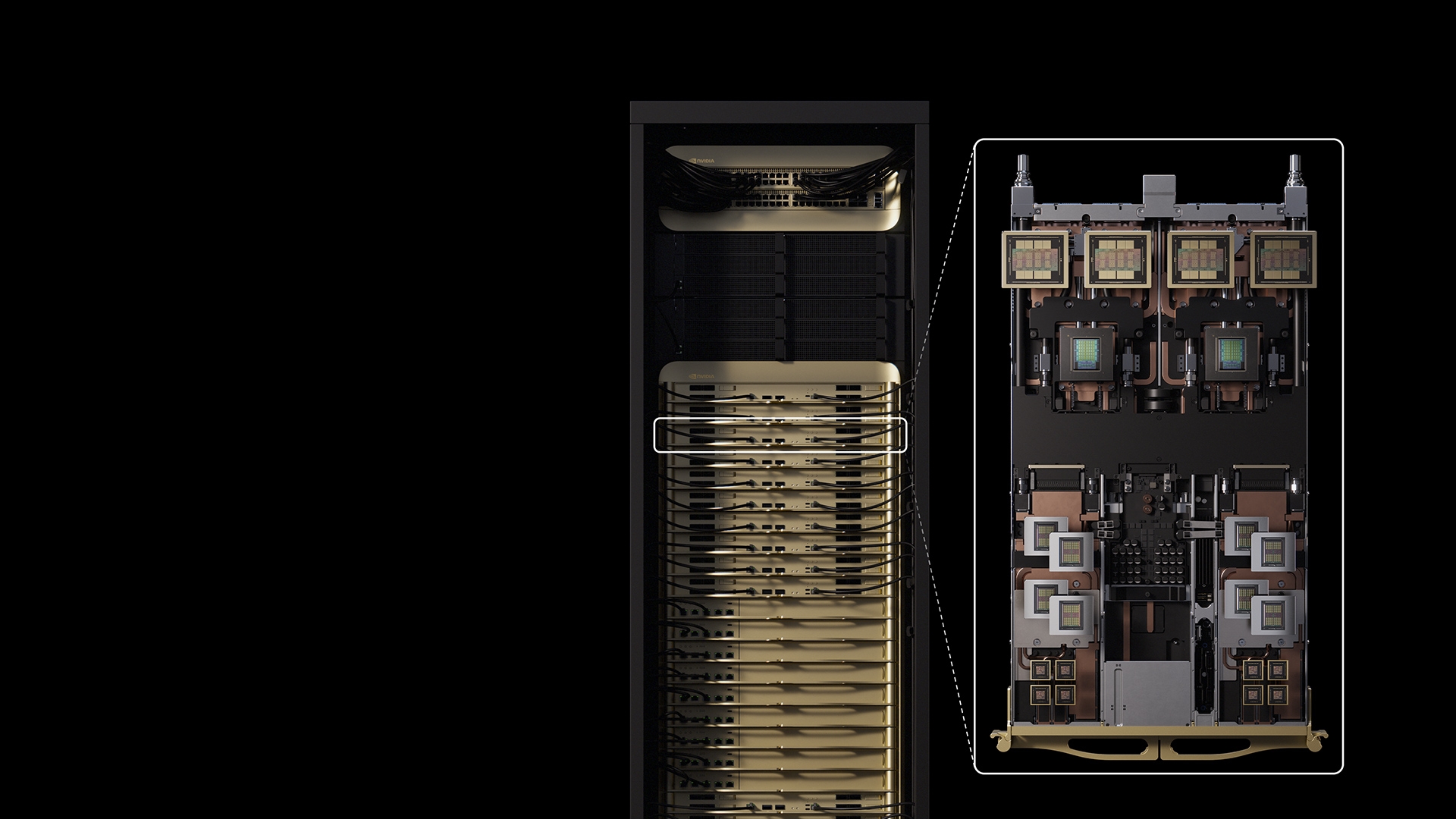
Reuters-based reporting says Nvidia has told Chinese customers its Vera Rubin AI chips could be available in China as soon as August 2026, with at least one buyer considering a 300-server test order.
Nvidia is telling Chinese customers that its next-generation Vera Rubin AI chips could be available in China as soon as August 2026, according to a Reuters-based report relayed by Investopedia. The report suggests the company is signaling a possible return to a market that has been difficult to serve because of U.S. export controls and Chinese policy pressure.
The reported discussions are not the same as a confirmed shipment, a booked order, or a recognized revenue event. But they do indicate that Nvidia may be testing whether it can reopen a path for more advanced hardware sales in one of the world’s largest AI markets.
What the report says
Investopedia said at least one Chinese company is preparing to order about 300 servers using the new chip for testing before deciding on a larger purchase. That detail matters because it points to early commercial interest, not just abstract market talk.
The same report said Nvidia had still not recorded revenue from earlier approved H200 sales to China, even after U.S. authorities allowed limited exports of that chip to certain Chinese customers. That suggests regulatory approval alone has not translated into smooth or immediate deliveries.
Nvidia has not publicly confirmed the China timing described in the report. So for now, the clearest reading is that the company is exploring demand rather than announcing a formal launch in China.
Why Vera Rubin matters
Vera Rubin is Nvidia’s next major data-center platform after Blackwell, and it sits at the center of the company’s 2026-2027 product roadmap. Nvidia’s official materials describe the Rubin family as a next-generation system for large-scale AI workloads, built around the Vera CPU and Rubin GPU.
That makes the China question more significant than a routine product update. If Nvidia can sell Vera Rubin-class hardware into China, it would reinforce the company’s growth story and potentially reopen a large revenue pool. If it cannot, it would underline how tightly the market remains constrained.
The platform is already moving forward
Nvidia has already publicly unveiled Rubin-related products. The company’s newsroom materials establish that Rubin is an active roadmap item rather than a speculative concept.
Separately, Tom’s Hardware reported in March 2026 that Nvidia had begun delivering Vera Rubin samples to select customers and expected production shipments in the second half of 2026 or early 2027. That reporting does not prove anything about China sales, but it does show the platform is advancing toward deployment.
China remains the hard part
The China market has been one of Nvidia’s most important growth opportunities and one of its most constrained. U.S. export controls have restricted shipments of the company’s most advanced AI chips to China for years, forcing Nvidia to adjust its product strategy repeatedly.
China has also discouraged some foreign chip purchases in favor of domestic alternatives. That adds a second layer of risk: even if Nvidia is willing to sell and U.S. rules allow it, Chinese regulators and customers may still limit adoption.
The reported Vera Rubin pitch therefore sits at the intersection of two policy regimes. Nvidia would need to navigate export licensing, customer demand, and Beijing’s stance at the same time.
What to watch next
The immediate questions are whether Nvidia or any Chinese customer confirms the August timing, whether the reported 300-server test order moves ahead, and whether a specific buyer is named. Any sign of export-license progress or customs activity would also be important.
It will also matter whether Chinese regulators continue to discourage purchases of foreign advanced chips, or whether major cloud and AI buyers in China publicly signal interest in testing the platform. Those developments would help show whether this is a genuine reopening or just a cautious sales probe.
For now, the story is best understood as Nvidia testing the limits of a possible China comeback. The company appears to be signaling that its next-generation hardware could be available, but the real outcome will depend on regulation, approvals, and whether Chinese buyers are ready to commit.
Revision note
Initial automated publication.