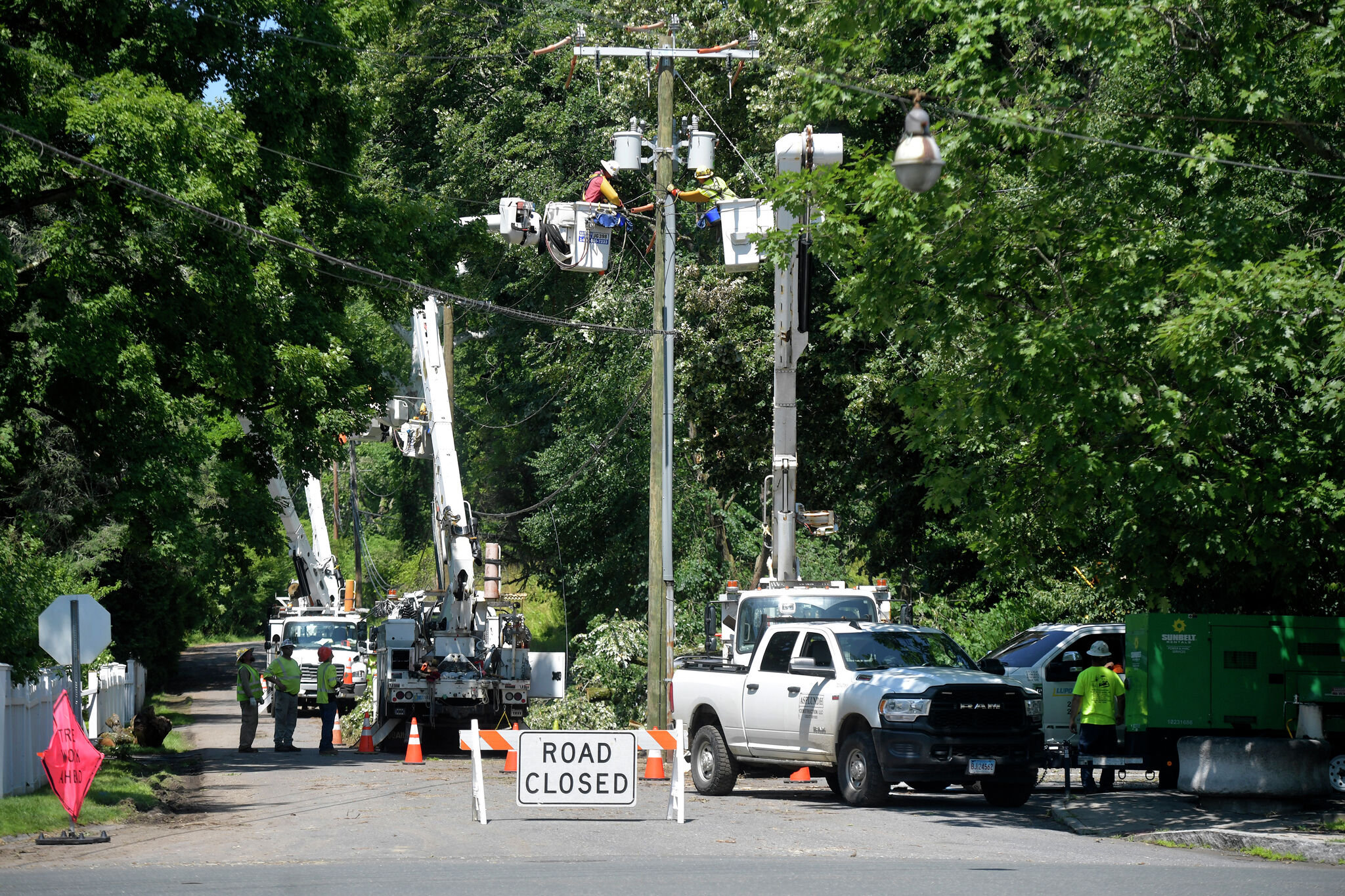
Salisbury was among the last Connecticut towns to regain power after the July 4 storms, as crews replaced dozens of poles and worked around road closures, safety checks and private-property damage.
After severe thunderstorms hit Connecticut on July 4, Salisbury ended up among the last towns to get power back, a reminder that restoration can take far longer than the storm itself.
Statewide outages dropped sharply over the next few days, but the final repairs in northwest Connecticut were slowed by problems that are often invisible in the first damage totals: broken utility poles, blocked roads, safety checks and access issues on private property.
CT Insider reported that the hardest-hit area required roughly 60 pole replacements. In Salisbury, Main Street and other roads were closed at times so crews could work safely and move equipment where it was needed.
Why restoration took longer
Eversource said the slower recovery was driven by several factors at once. Crews had to complete safety inspections before moving ahead with some repairs, coordinate with other utilities, and deal with damage on private property that the company does not clear.
That combination can make restoration look uneven from town to town. A smaller community can still wait longer than a larger one if the damage is concentrated in places that require pole replacement, traffic control and careful access to work sites.
The reporting said most Connecticut customers were restored by Tuesday, July 8, but Salisbury and nearby areas remained without power longer because the local damage was more extensive.
Impact on residents
For residents, the delay had everyday consequences that can quickly become serious. Power outages affect food storage, communications and the use of medical devices, and the costs can rise fast when service is out for days instead of hours.
Small businesses can also lose revenue while waiting for electricity to return, adding another layer of pressure to storm recovery even after the weather has passed.
State response and next steps
Governor Ned Lamont said towns and cities should document storm-related costs as Connecticut weighs whether to seek federal disaster aid. He also said the state will hold a debrief that includes Eversource’s performance.
That means the July 4 storms are still producing consequences well after the last clouds cleared. Beyond the cleanup itself, local officials are now in the accounting phase, preparing damage records that could shape whether the state asks Washington for help.
The Salisbury restoration also underscores a basic pattern in storm response: the biggest delays often come not from the initial outage, but from the repair work that follows it. Replacing poles, clearing safe access and restoring damaged lines can take days, especially when roads are closed and work must be sequenced carefully.
CT Insider’s reporting placed Salisbury among the last Connecticut towns restored after the holiday storms, making the town a case study in why recovery timelines can vary so sharply from one community to the next.
Revision note
Initial automated publication with expanded verified context.