Australia’s pesticide regulator has kept paraquat approved after a decades-long review, but imposed tighter use conditions including lower application rates, enclosed mixing and loading, stronger PPE and a two-year phaseout for existing stocks.
Australia’s pesticide regulator has decided paraquat will remain approved for use in Australia, rejecting calls for a ban while imposing tighter conditions on how the herbicide can be handled and applied.
The Australian Pesticides and Veterinary Medicines Authority said the evidence it assessed did not show that approved uses of paraquat increase the risk of Parkinson’s disease. The final decision also covers diquat, which was reviewed alongside paraquat.
The ruling was gazetted on Tuesday, June 23, 2026, after a review that reporting says has been under way since 1997. It closes a long-running regulatory process, but it does not settle the wider political and scientific fight over the herbicide.
What the regulator decided
Paraquat will stay on the market, but under tighter controls.
Reporting on the APVMA decision says the maximum application rate will fall to 231 grams per hectare from 1,150 grams per hectare. A higher rate will still be allowed for technology-assisted spot spraying, but only up to 30% of a total area.
Backpack sprayers are being phased out. The regulator is also requiring enclosed mixing and loading systems and stronger personal protective equipment.
Existing stocks will be phased out over two years, and new label conditions will apply to new products.
The APVMA said it used contemporary risk-management frameworks and scientific investigation of human-health and environmental impacts in reaching its conclusion.
The Parkinson’s dispute
The central argument in the review has been whether paraquat exposure should be treated as a Parkinson’s disease risk serious enough to justify a ban.
The APVMA said the weight of evidence did not establish that approved uses of paraquat increase the risk of developing Parkinson’s disease. That position puts Australia at odds with advocates who say the precautionary principle should have driven a much harder outcome.
Parkinson’s Australia and several health professionals criticised the decision, saying the science supports a ban or stronger action. Their criticism focused on the disease risk question and on the fact that paraquat remains legal in Australia while many countries have already prohibited it.
Reporting says more than 70 countries have banned paraquat. Campaigners have used that comparison to argue Australia should not continue relying on the chemical.
Why farmers wanted it kept
Farmers and industry groups argued that paraquat remains an important agricultural tool, especially for no-till farming and weed control.
The National Farmers’ Federation welcomed the decision to keep paraquat available, saying it remains important for no-till practices and weed management.
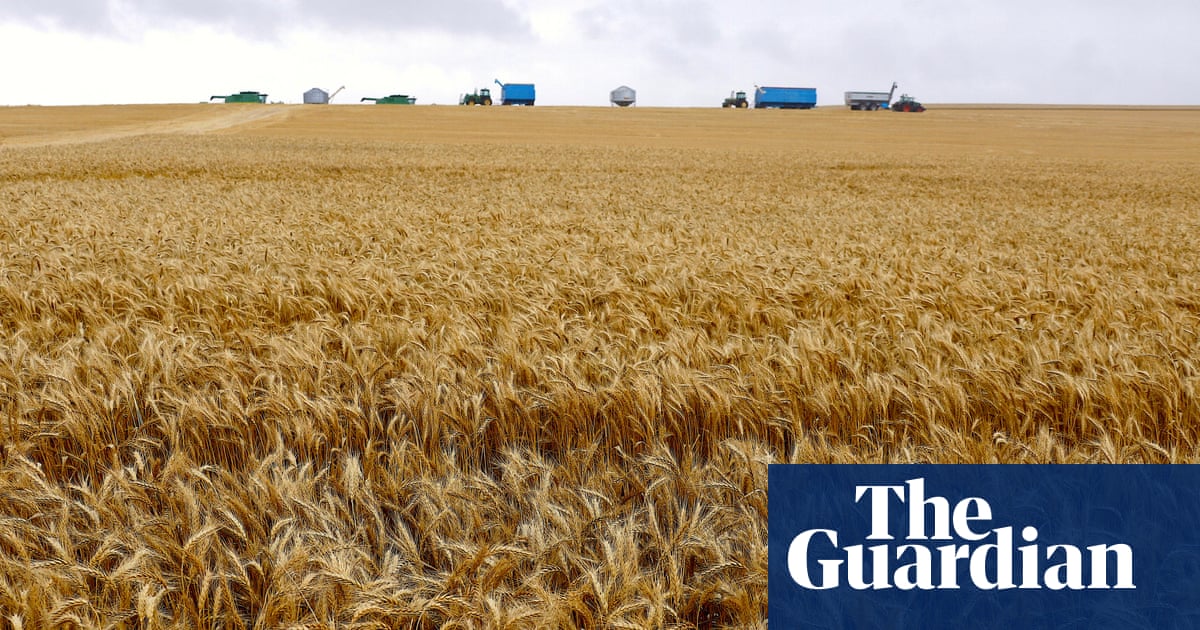
That support reflects the practical role paraquat plays in broad-acre agriculture. Reporting says it is used across grains, sugarcane, cotton and horticulture, where growers see it as a useful weedkiller for specific applications.
The APVMA’s decision tries to keep that access while making the product harder to use and more tightly controlled.
A review that stretched for decades
The paraquat review has been unusually long. Reporting says it began in 1997, making it one of the regulator’s most drawn-out assessments.
That length helped turn the review into a political issue as well as a technical one. In early June, reporting highlighted parliamentary scrutiny of the delay and pressure on the APVMA to make a final call.
By June 23, the process had become a clear test of how Australia would regulate a chemical linked by critics to serious health concerns but defended by growers as an essential part of their management toolkit.
What happens next
The immediate practical next step is the publication of updated product labels and the new detailed conditions for use.
Those labels will determine how suppliers, growers and applicators adjust over the transition period. The two-year phaseout of existing stocks gives the market time to move to the updated rules, but it also means the new restrictions will be felt gradually rather than all at once.
The decision also leaves open the prospect of further pressure on policymakers. Parkinson’s advocates and some critics are likely to keep pushing for stronger regulatory or legislative action, while farming groups will try to preserve access to the chemical under the tighter regime.
For now, Australia has chosen restriction rather than prohibition. The APVMA has kept paraquat approved, but it has made clear that the product will face narrower, more tightly supervised use from here on.
Revision note
Initial automated publication.