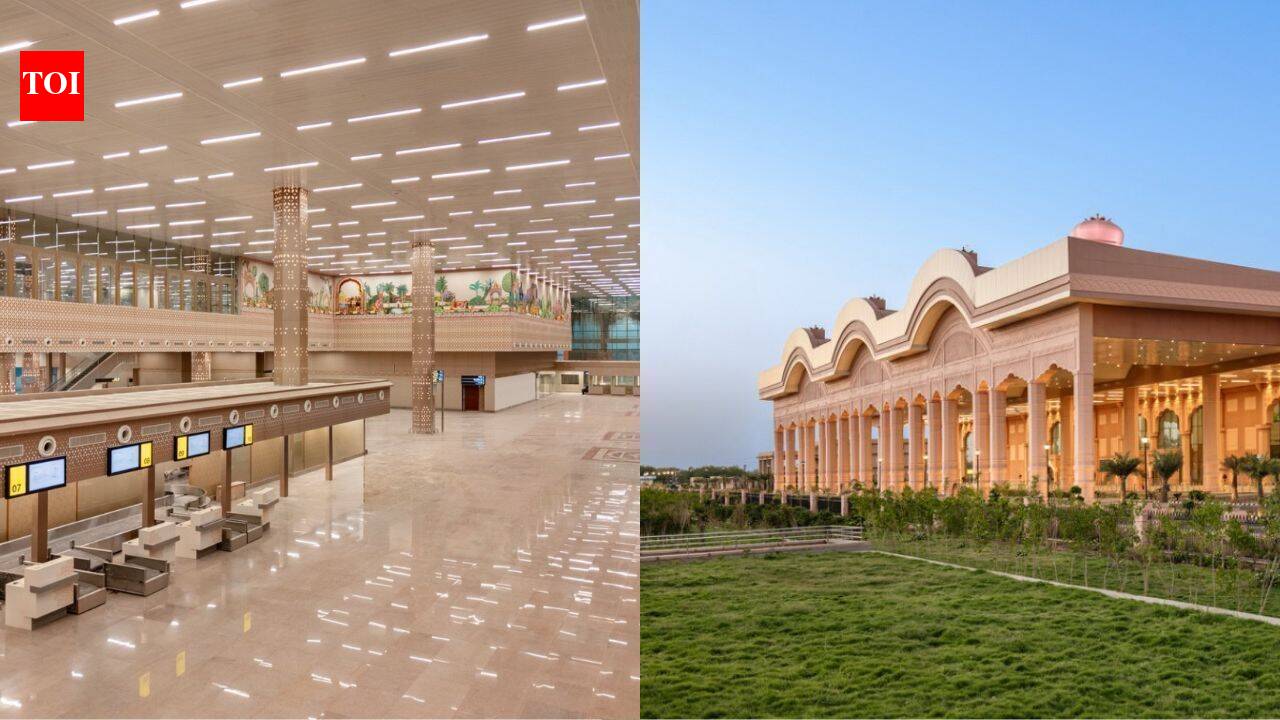
Prime Minister Narendra Modi inaugurated Jodhpur Airport’s new terminal on July 4 and launched a modified UDAN scheme aimed at expanding regional air connectivity. Reports say the terminal cost about ₹480 crore and is designed to handle up to 20 lakh passengers annually, while the revamped scheme has a ₹28,840 crore outlay over 10 years.
Prime Minister Narendra Modi inaugurated the new terminal building at Jodhpur Airport on July 4 and launched a modified version of the UDAN regional connectivity scheme, according to same-day reporting.
The opening adds a significant new aviation facility in western Rajasthan. Reports say the terminal was built at a cost of about ₹480 crore and is designed to handle up to 20 lakh passengers a year.
Jodhpur terminal opening
The new terminal had been under construction before Friday’s inauguration. It marks a major upgrade for an airport that matters beyond Jodhpur itself because it serves both civilian travel and a military-linked aviation environment.
Reporting from the day of the event said the terminal was developed as part of a broader push to improve passenger capacity and airport infrastructure in the region.
For travelers and airlines, the significance is straightforward: more space, better facilities and the possibility of supporting higher traffic if operations and routes grow to match the new terminal’s capacity.
Modified UDAN launch
Modi also launched a modified UDAN, or Ude Desh ka Aam Naagrik, scheme on the same day. Reporting says the revamped program carries an outlay of ₹28,840 crore over the next 10 years.
The scheme is intended to widen regional air connectivity, with reports saying it aims to develop 100 existing airstrips into UDAN airports and allocate ₹12,000 crore for that purpose.
UDAN has been one of India’s core aviation policy tools for making air travel more affordable and extending service to underserved places. The modified version appears to continue that policy while adding a larger funding envelope and a wider airport-development target.
Why it matters
The pairing of the Jodhpur terminal inauguration with the UDAN relaunch reflects a broader infrastructure-and-policy approach to aviation growth. One side is physical capacity at an airport that can absorb more passengers; the other is the subsidy and network framework needed to make regional routes viable.
The stakes are not limited to Jodhpur. A successful rollout could improve connectivity across smaller cities and airstrips if airlines take up routes and the government’s execution matches the plan.
At the same time, the reporting reviewed so far leaves open how quickly the scheme will translate into new services, which airports will be prioritized first and how route allocations will be handled.
What to watch next
The next updates are likely to come from a formal government or ministry note, carrier announcements or route-level implementation details.
For now, the confirmed picture is a new terminal at Jodhpur Airport, a reported ₹480 crore investment, a 20 lakh-passenger design capacity and a modified UDAN scheme positioned as a larger push for regional connectivity.
Revision note
Expanded into a fuller, chronology-driven initial publication with separate coverage of the terminal, UDAN, stakes and next steps.