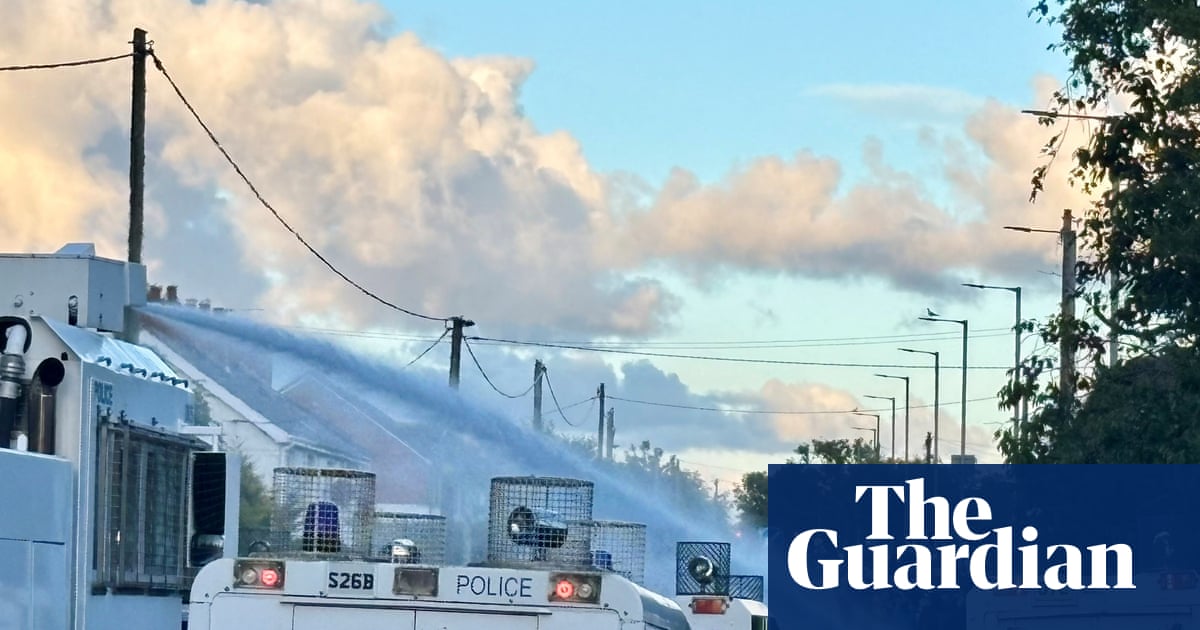
Police used water cannon during a third night of unrest in Northern Ireland after a Belfast stabbing case sparked anti-immigration violence. The disorder spread across Belfast-area locations and other towns, with arrests, injuries, property damage and condemnation from ministers, police and the victim’s family.
Third night of disorder
Police in Northern Ireland used water cannon during a third night of unrest that followed a stabbing case in Belfast and spread across several towns.
The latest violence again centred on Newtownabbey, north of Belfast, where crowds threw bricks and petrol bombs, burned a truck and tried to target a hotel believed to be housing migrants.
Disorder was also reported in Derry and Coleraine, widening what police and local officials have described as a fast-moving and racially charged pattern of unrest.
How the violence spread
The unrest began after a knife assault in Belfast left Stephen Ogilvie severely injured. Police said the case remained under investigation, and a Sudanese man, Hadi Alodid, has been charged with attempted murder and knife offences.
Reporting on the first nights of disorder described the violence moving from the Belfast area into other locations as crowds gathered, attacked police lines and targeted property linked to foreign nationals.
A later Guardian live report said police again used water cannon as the unrest continued into a second night, with at least one officer and one civilian injured.
That report also said 16 people had been arrested and 12 police officers injured on the second night, and that around 27 people were made homeless after mobs targeted foreign nationals.
Official response
Northern Ireland Secretary Hilary Benn condemned the violence as racist thuggery, underlining the pressure on both local and UK authorities to restore calm.
Police Scotland has been assisting the Police Service of Northern Ireland, including through dog teams, as officers try to contain unrest that has stretched across multiple flashpoints.
Officials have also pointed to online misinformation as a factor in the tensions. The victim’s family said false claims circulating online had fuelled anger and urged people to stay peaceful.
Family appeal and online fallout
Stephen Ogilvie’s family appealed for calm after the stabbing and rejected the violence carried out in the attack’s name.
The family’s statement added to a wider warning from officials that social media posts and rumours were helping drive escalation rather than restraint.
Ofcom is examining social-media platforms amid concern that online content may have inflamed tensions and encouraged further disorder.
What happens next
Police are expected to keep watching Belfast, Derry, Coleraine and surrounding areas for more unrest.
The immediate questions are whether more arrests, injuries or reinforcements will follow, and whether the disorder eases after the third night or spills into another one.
Authorities are also likely to face continued scrutiny over the handling of the stabbing case, the policing response and the role of misinformation in the violence.
The case has now become both a criminal investigation and a test of public order, with officers and ministers trying to stop local outrage from turning into further attacks on migrant communities and police.
Revision note
Expanded with fuller chronology, official response, family reaction and what-next context.