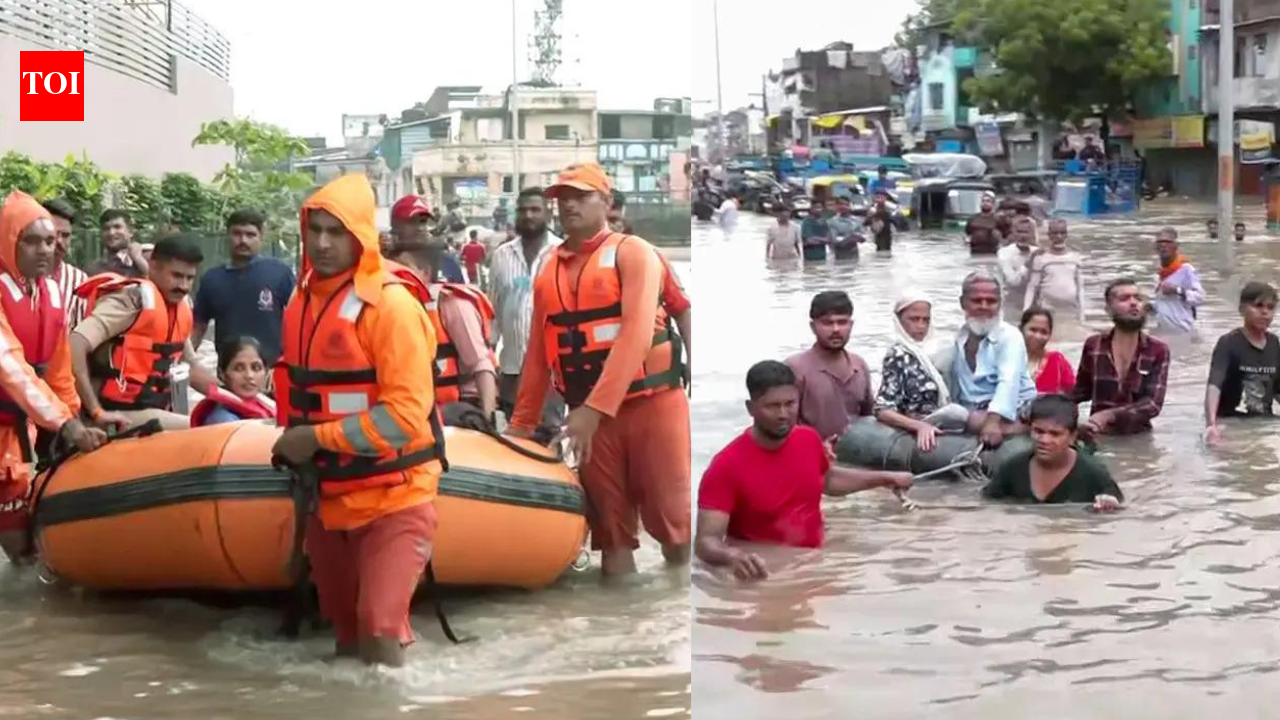
IMD issued a statewide heavy-rain, thunderstorm and lightning alert for Gujarat on July 9 as flooding, waterlogging and rescue operations continued across affected districts.
Gujarat remained under pressure on July 9 after the India Meteorological Department issued a statewide alert for heavy rain, thunderstorms and lightning. The warning came as flooding and waterlogging continued to disrupt daily life in several parts of the state.
The situation has evolved into a wider emergency rather than a single city incident. Reporting on July 9 said waterlogging was being seen in multiple areas, while relief and rescue teams were still responding to the worst-hit neighborhoods.
Surat at the center of the flooding
Surat emerged as one of the hardest-hit cities in the latest reporting. According to Times of India coverage published July 9, the city received 358 mm of rain in the 24 hours ending Wednesday morning.
That volume of rainfall left flood-like conditions in several neighborhoods. The same reporting said about 3,400 people were rescued from flooded neighbourhoods in Surat, underscoring the scale of the disruption and the immediate public-safety response.
The rain also hit transport and movement across the city. Low-lying areas were especially vulnerable as water accumulated quickly, turning the event into a broader civic and humanitarian problem.
Statewide IMD warning
The IMD alert covered Gujarat as a whole and warned of more heavy rain, thunderstorms and lightning. The statewide nature of the warning matters because it indicates the risk is not limited to one district or one urban pocket.
The broader weather pattern was also being tracked as part of a larger monsoon surge across India. Separate reporting on July 9 said the monsoon was expected to cover the entire country and that IMD had warned of flooding and thunderstorms in multiple regions.
Government response
State authorities were also moving into response mode. Times of India reported that Gujarat Chief Minister Bhupendra Patel was scheduled to visit Surat and Valsad on July 9.
That visit reflects the focus on southern Gujarat, where the rain impact has been most visible in the available reporting. Surat and Valsad were both singled out in the coverage as districts requiring direct attention.
Remaining questions
Some details about the full human toll are still unclear. One report referred to 13 deaths in the broader Gujarat rain event, while another framed the 13 fatalities as occurring in Surat, and that attribution has not yet been fully reconciled.
The district-wise damage picture is also incomplete. What is already confirmed is that the state is facing ongoing flooding, rescue work and weather risk, with the possibility of more rain keeping pressure on already saturated areas.
The next official IMD update will matter most for whether the alert is extended or escalated. For now, Gujarat is dealing with a live monsoon emergency marked by heavy rain, waterlogging, lightning risk and continuing relief operations.
Revision note
Initial automated publication.