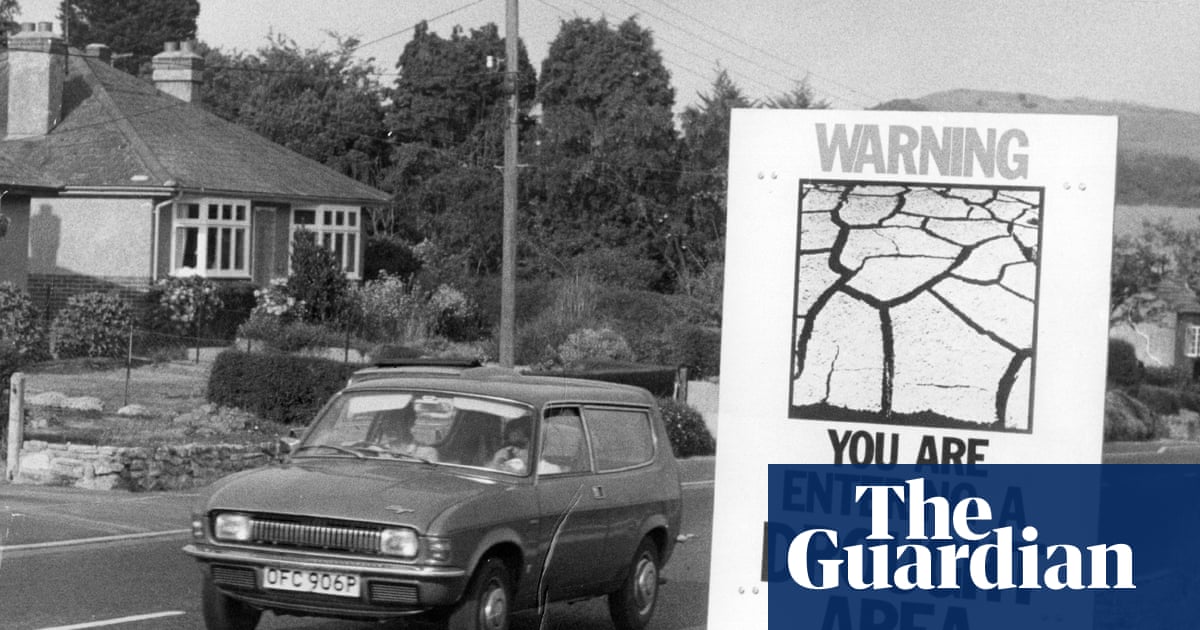
The 50th anniversary of the 1976 UK heatwave is being marked alongside new modelling suggesting a similar event in the 2050s could bring longer extreme heat, 45C in England and worse water stress.
The 50th anniversary of the 1976 UK heatwave is being marked as more than a memory. In new reporting on Tuesday, the event has become a warning about how much hotter, drier and more disruptive British summers could become.
The Guardian said the anniversary event brought together the University of Reading, Newcastle University, the Royal Meteorological Society and the Met Office. It also came as the UK faced a rare red weather warning and England was under a red heat health alert.
That timing gave the commemoration an immediate edge. A heatwave that still sits at the centre of British weather memory was being revisited not as a curiosity, but as a benchmark for what the country may need to manage far more often.
Why 1976 still matters
For decades, 1976 has been shorthand for exceptional summer heat in the UK. The Guardian said the heatwave brought 15 consecutive days above 32C somewhere in the country, a sustained spell that fixed itself in public memory.
That benchmark is now being used differently. Rather than asking whether 1976 could happen again, the question in the reporting is what a 1976-style event would look like in a warmer climate.
The answer described by The Guardian is stark. In a Met Office scenario discussed at the anniversary event, a comparable heatwave in 2056 could last 14 days and push temperatures above 40C for nine consecutive days.
The modelled peaks were severe across the UK. The reporting says England could reach 45C, Wales 41C, Scotland 38C and Northern Ireland 30C.
The Met Office said the scenario is only plausible because of high greenhouse-gas emissions from burning fossil fuels. In other words, the exercise is being presented as a warning about the conditions that become possible if warming continues.
The new modelling
The modelling gives the debate a different scale. It shifts the focus from single-day temperature records to multi-day heatwaves that would be harder to manage for health services, transport systems, schools and households.
It also changes the frame around national resilience. A heat event once remembered for its rarity is now being treated as a plausible template for what future summers could bring under high emissions.
The live weather context underlined the point. On the same day, Guardian live coverage said the Met Office warned temperatures could reach 39C amid a wider European heatwave.
The anniversary event itself was held in London, in an air-conditioned basement in King’s Cross, and included MPs, policymakers and members of the public. That setting reflected the gap between memory and planning: the country is no longer just remembering 1976, but trying to work out how to live with hotter summers beyond it.
Drought and water stress
The reporting also goes beyond heat alone. Newcastle University modelling cited by The Guardian suggested that a heatwave like 1976 would today be 20% drier and would create a 10% greater water deficit.
That matters because heatwaves are not only public-health events. They also put pressure on reservoirs, treatment works and supply planning, and they can expose weaknesses in the wider water system.
The article says England alone could face a public water supply shortfall of about 5 billion litres per day by 2055 without more investment. That turns the story from a historical comparison into an infrastructure problem.
It also broadens the policy response. If hotter summers are becoming the new normal, adaptation has to include water supply as well as cooling, emergency planning and heat-health advice.
Health and policy stakes
The immediate health risk is already visible in the present warnings. The Guardian said the 1976 anniversary was being discussed against the backdrop of both a rare Met Office red warning and a red heat health alert from the UK Health Security Agency in England.
That combination matters. It shows how a once-rare event now sits inside an active warning environment, where extreme heat is no longer just remembered but managed in real time.
The policy stakes are correspondingly broad. More frequent and more intense heatwaves raise public-health risks, intensify drought stress and increase pressure for adaptation in homes, schools, health services and infrastructure.
The political pressure is also clear. The hotter the summers become, the harder it is to avoid spending on preparation as well as emissions reduction.
What the anniversary made plain is that 1976 still functions as the UK’s benchmark heatwave. But the new modelling and the live warnings suggest that benchmark is increasingly being used to map the climate risks ahead, not just to remember the past.
Revision note
Expanded into a fuller reported feature with chronology, modelling, drought, health and policy context.