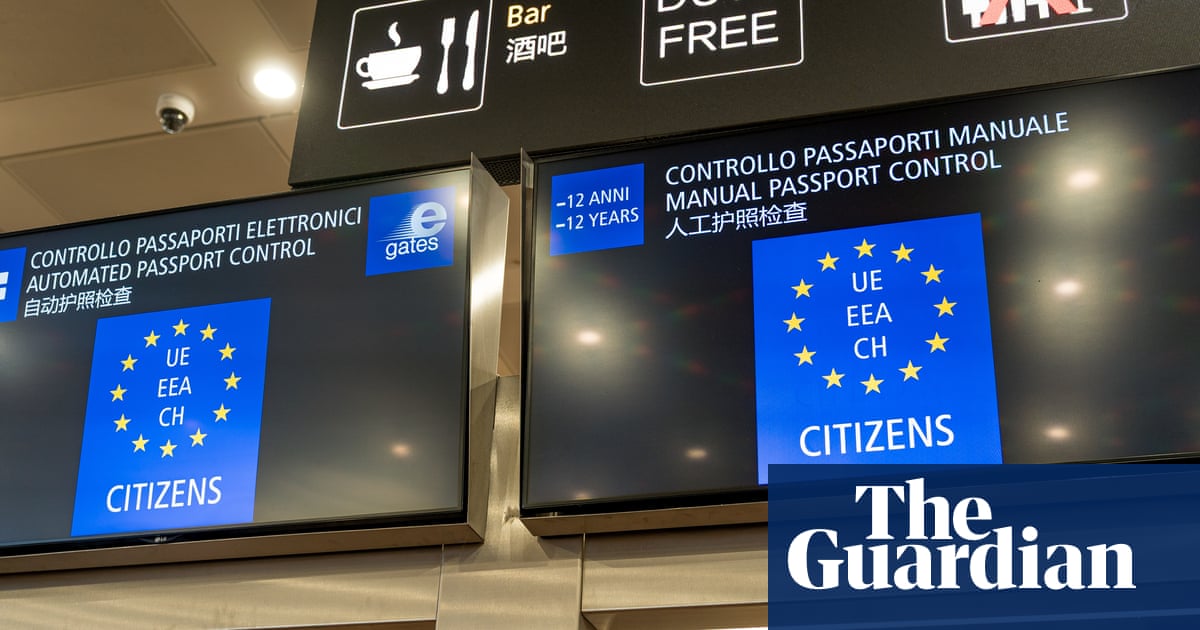
Rome airport operator Aeroporti di Roma is warning that the EU’s Entry/Exit System could trigger severe summer delays at Fiumicino and Ciampino unless biometric checks can be temporarily suspended. The European Commission says the system is operational and that border authorities can use flexibility to preserve fluidity.
Aeroporti di Roma has warned that the European Union’s new biometric border system could cause a summer “disaster” at Rome’s airports unless authorities are allowed to temporarily suspend it during the peak travel season.
The company, which operates Fiumicino and Ciampino, says the Entry/Exit System is not yet coping well enough with the volume of holiday traffic expected in the coming weeks. It wants the option to pause biometric registration if queues begin to build and flights start to back up.
The warning lands just months after the system’s full rollout across Schengen borders and adds to wider industry concerns that the first summer of full implementation could expose bottlenecks at major European gateways.
Rome raises the alarm
Marco Troncone, the chief executive of Aeroporti di Roma, said the airports need the ability to suspend EES registration during the summer peak to avoid severe disruption. The warning applies to both Fiumicino, Rome’s main international airport, and Ciampino.
ADR’s concern is straightforward: the new system may work in theory, but it is not yet reliable enough to absorb the combination of heavy holiday demand, repeated first-time registrations and the operational strain that comes with one of Europe’s busiest travel periods.
The stakes are high for Rome because delays at Fiumicino can ripple beyond the city. As a major tourism and transfer hub, any slowdown in border processing can affect airline turnarounds, missed connections and broader flight schedules across Europe.
The issue is not simply theoretical. Airport operators say the system has already produced long queues and technical failures at some airports, and industry groups have warned that waits can stretch to hours at the worst-affected points.
How the system works
The Entry/Exit System is the EU’s biometric replacement for the old passport-stamp process at Schengen external borders. It requires non-EU travelers to provide fingerprints and facial images on first entry into the bloc.
Supporters say the system is meant to strengthen border management and make travel records more accurate. But the practical burden falls on airports and border authorities, which must collect and process biometric data from large numbers of passengers in short windows.
That is the pressure point in Rome. ADR is not arguing against border controls in principle. Its complaint is that the new digital process may need to be switched off temporarily during peak weeks if it threatens to overwhelm passenger flow.
The warning comes after repeated delays to the system’s launch. The EES was rolled out in April 2026, but concerns about readiness have continued into the summer travel season.
Brussels says the system can flex
The European Commission says the system is fully operational and has pushed back on claims that the technology itself is the main source of delays.
Officials in Brussels say that long waits are often driven by pre-existing operational constraints, including staff shortages, infrastructure limits and concentrated flight schedules. They also say the rules include flexibility to preserve border fluidity, including suspending biometric checks where needed.
That flexibility is important because it means the Rome warning is not asking for a rewrite of the rules. It is asking for use of an exception that the Commission says already exists.
Some airports in Greece have already allowed certain travelers, including British citizens, to bypass EES checks, showing that member states are already using the system’s flexibility in practice.
Why summer matters
The timing is what makes the warning especially urgent. Rome is heading into its first major summer peak since the system’s full rollout, and the airport operator says that is exactly when bottlenecks are most likely to turn into a wider disruption.
European aviation groups have been warning for months that delays could worsen through the summer. The concern is that a problem at one major airport can quickly spread through tightly scheduled airline networks, affecting flights well beyond Italy.
For passengers, that could mean longer queues at arrival, missed onward connections and unpredictable delays at a time when airports are already under maximum seasonal pressure.
For airlines and airport operators, the risk is more systemic. A checkpoint that slows to a crawl can disrupt aircraft rotations, gate planning and staffing across the network.
What happens next
The immediate question is whether Italian authorities will request, or approve, any temporary suspension of EES checks at Fiumicino and Ciampino before the busiest travel weeks begin.
It is also unclear how broadly the suspension flexibility can be used this summer, and whether other major airports will make similar requests if queues keep building.
The Commission’s position suggests the system will remain in place, but the Rome warning shows that airport operators are already pushing for practical exemptions where they believe border processing threatens smooth travel.
If no adjustment is made, Rome’s airports could become an early test of whether the EU can enforce its new biometric border regime without causing major summer disruption at one of Europe’s most important travel hubs.
Revision note
Initial automated publication.