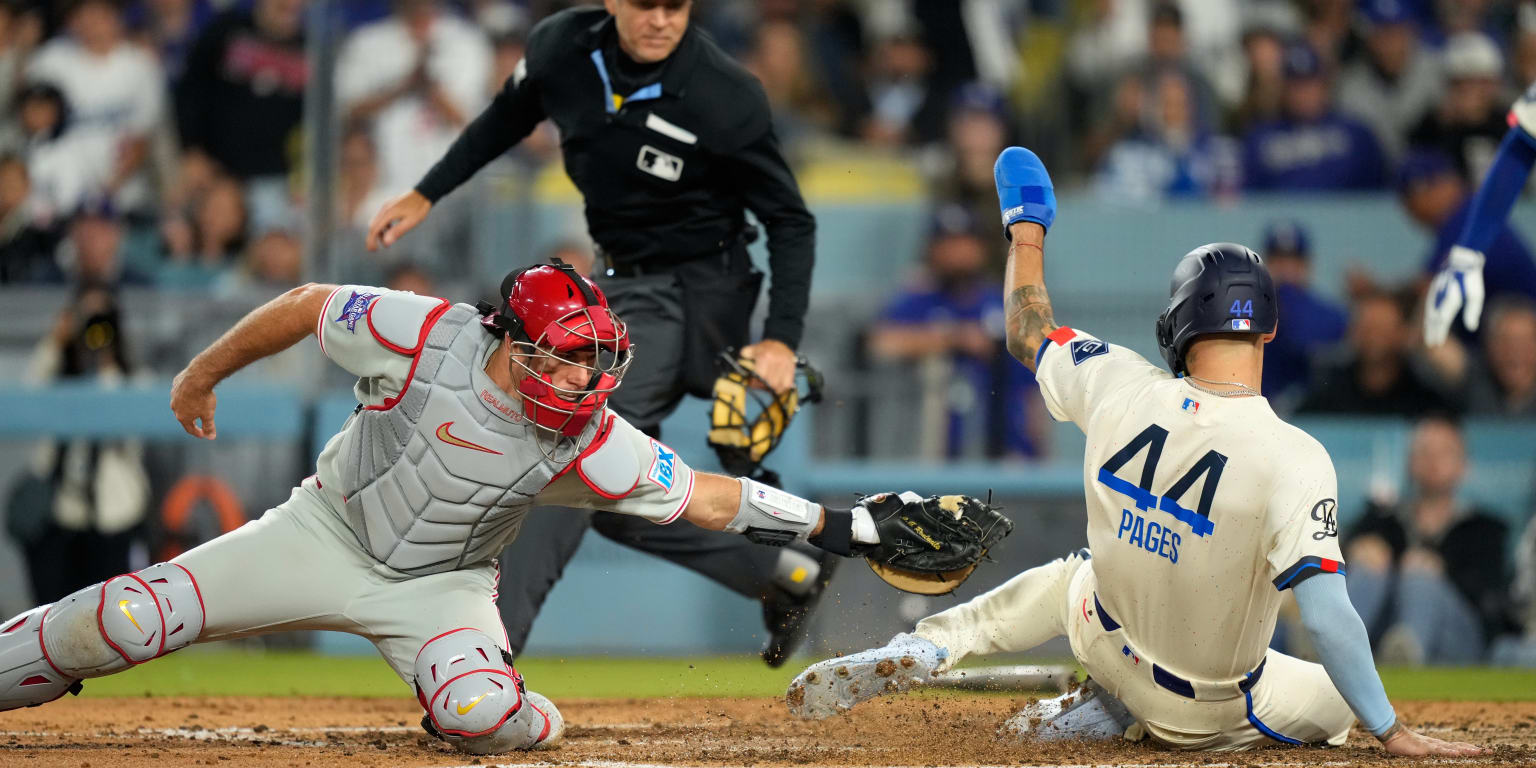
The Phillies are changing how they handle close plays at home plate after Andy Pages was ruled safe in a May 31 game at Dodger Stadium despite missing the plate. Interim manager Don Mattingly said the team will touch the plate and appeal first on similar plays going forward.
The Phillies are changing their home-plate procedure after a replay wrinkle in Los Angeles allowed a run to stand even though the runner had not touched the plate.
In a May 31 game against the Dodgers, Andy Pages was ruled safe on a play at home plate. MLB reported that replay showed Pages had missed home plate, but Philadelphia first challenged the tag play, which meant the missed-plate appeal was not considered during that review.
Interim manager Don Mattingly said the club’s new approach will be to touch the plate and appeal first on close plays at home. The goal is simple: avoid losing a run because the appeal sequence was handled in the wrong order.
The issue is rooted in baseball’s appeal process. On close plays, a missed plate is not automatically an out; it has to be properly appealed. The Phillies’ plan is meant to make sure that step is not missed in a tense, fast-moving game.
MLB’s follow-up coverage on June 1 made clear that the club’s response was immediate and procedural rather than a major rule change. It was a one-game lesson, but one the Phillies do not want to repeat.
Revision note
Initial automated publication.