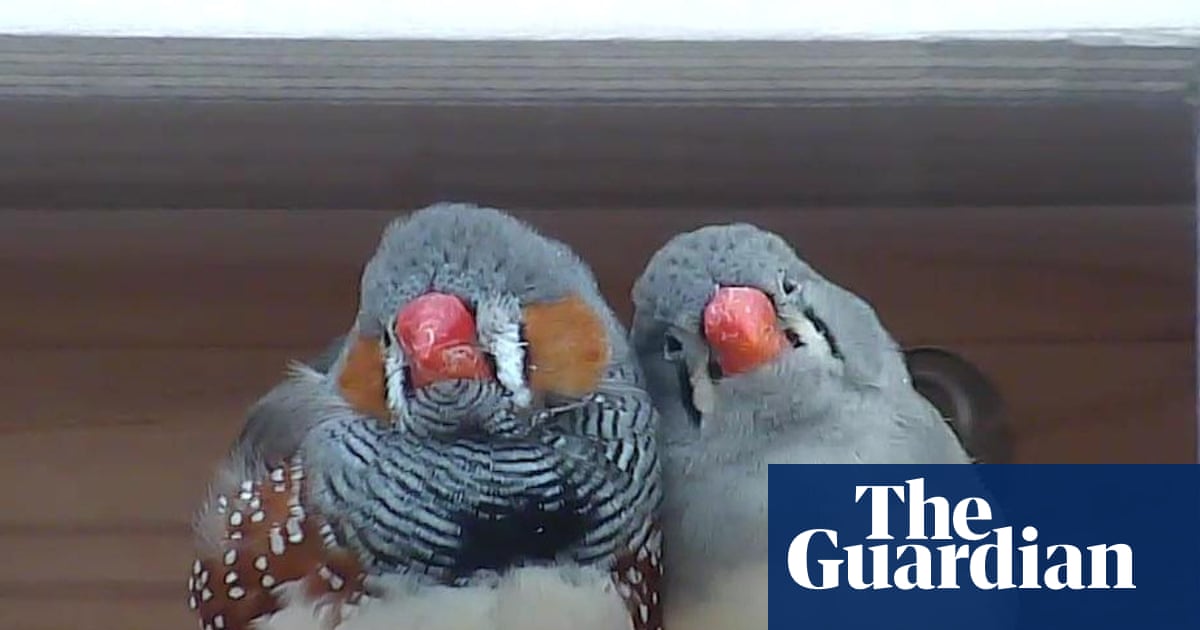
Julie Elie of UC Berkeley won the 2026 Coller-Dolittle Prize for research on zebra finch vocalizations, including work identifying 11 core calls and testing their meanings with machine-learning analysis and behavioral experiments.
Julie Elie, a researcher at the University of California, Berkeley, has won the 2026 Coller-Dolittle Prize for work on zebra finch vocalizations, in a prize announcement that places her research at the center of the push toward understanding animal communication.
The award was reported on June 26, 2026. According to the coverage, the prize recognizes research that moves the field a step closer to two-way human-animal communication, even if that goal remains far off.
Elie’s winning work focused on how zebra finches use calls to communicate identity and activity. The reporting says she identified 11 core calls in the birds’ repertoire and connected them to specific meanings through observation and testing.
How the research worked
The research combined long-term observation, machine-learning analysis and behavioral experiments. Over time, the team cataloged recurring sounds, grouped them into call types and then checked how birds responded when those sounds were played back.
Those playback and reward-style tests were used to see whether the calls carried stable meanings rather than being random noises. The Guardian’s account says the method helped link specific vocalizations to behavior and context.
That matters because zebra finches are a useful model for this kind of work. They are highly vocal, and their steady stream of sounds gives researchers a large body of data to study with modern audio-analysis tools.
The result is not evidence that people can now converse with birds. It is a narrower scientific advance: a stronger map of how one species may encode information in sound, and how researchers can begin to decode it.
Prize context
The Coller-Dolittle Challenge was launched in 2024 by the Jeremy Coller Foundation and Tel Aviv University. It includes an annual $100,000 prize for progress and a separate $10 million grand prize for a breakthrough in two-way human-animal communication.
The annual prize is designed to reward incremental progress rather than a final solution. Last year’s winner was a team recognized for work on dolphin whistles, and the field has also drawn attention for projects involving mice, bonobos and chimpanzees.
Judges described Elie’s work as a meaningful moment in interspecies communication research. The reporting also says artificial intelligence and machine learning are becoming central tools in the area, as scientists try to sort and interpret animal sounds more systematically.
Elie said she was honored by the recognition and hoped the work would help advance efforts to communicate with animals. The broader claim, though, remains unproven: the prize marks progress toward translation, not a finished system for talking across species.
What comes next is whether UC Berkeley or the prize organizers publish additional detail, including a formal citation or judging memo, and whether the underlying zebra finch work is presented in peer-reviewed form beyond prize coverage.
Revision note
Initial automated publication.