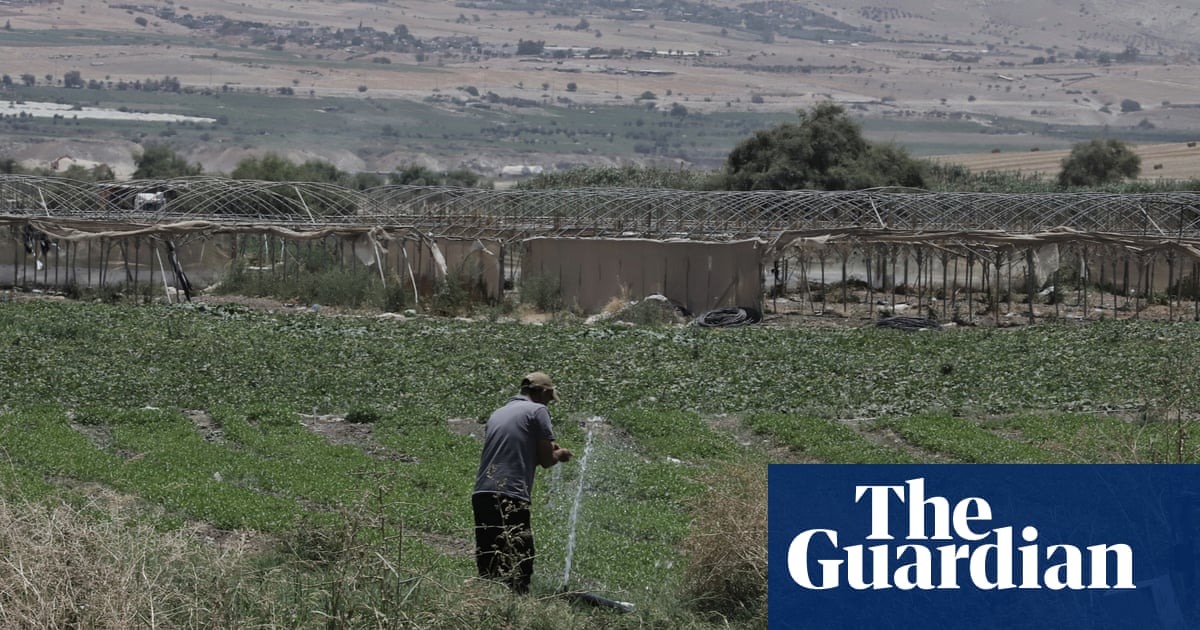
Global Echo says a review of more than 30,000 export documents found agricultural goods from settlements in occupied Palestine and the Syrian Golan Heights were repeatedly exported to Europe as if they were Israeli-grown, with about €13 million in falsely declared goods identified.
Investigation findings
Global Echo says a review of more than 30,000 export documents over eight years found agricultural goods from settlements in occupied Palestinian territory and the Syrian Golan Heights were repeatedly exported to Europe as if they were Israeli-grown.
The investigation, published on June 15, said about one in six shipments it examined involved settlement-origin produce. It also said at least 42 percent of the shipment records it reviewed were mislabelled, with about €13 million in goods falsely declared.
According to The Guardian's report on the investigation, the mislabelling may have allowed some goods to benefit from EU and UK trade discounts or preferential tariff treatment.
How the shipments were described
The investigation said it identified three broad methods used in the paperwork.
In some cases, export records listed the accurate settlement address but still described the goods as Israeli origin. In others, exporters used sham addresses inside Israel. A third method involved mingling settlement goods with Israeli products.
Those descriptions matter because customs authorities use origin claims to determine how goods are classified at the border. If produce from settlements is declared as Israeli, it can be treated differently for tariff and labelling purposes than goods identified as coming from occupied territory.
The findings, if borne out by regulators, would point to gaps not only in labelling but also in customs verification and origin certification along the supply chain.
Legal and policy backdrop
The report lands in a long-running dispute over how products from Israeli settlements should be treated in European markets.
In 2019, the Court of Justice of the European Union ruled that foodstuffs from territories occupied by Israel must show their territory of origin and, where relevant, settlement provenance rather than implying they are from Israel.
The EU has also long maintained that settlement goods do not qualify for preferential treatment under its trade arrangements with Israel.
The UK has recently taken a similar line in policy guidance. In early June 2026, ministers told businesses not to engage in economic and financial activity in Israeli settlements. A separate Guardian report on June 13 said the government described the guidance as consistent with its view that Israeli settlements are illegal under international law.
Who is affected
The allegations are relevant to several groups at once.
For settlement producers and exporters, the issue is whether paperwork allowed their goods to enter European markets under more favorable terms than the law allows.
For customs authorities, the report raises the question of whether origin checks were strong enough to detect misdeclared goods.
For European consumers, it highlights the risk of buying produce labelled as Israeli when it may have been grown in settlements that EU and UK policy treat differently.
For Palestinian farmers and producers, the trade issue sits alongside the wider economic consequences of settlement activity and the competition it can create in export markets.
What the investigation says it found
Global Echo said the document review covered an eight-year period and produced evidence of repeated origin mislabelling across agricultural shipments.
The group said the misdeclared goods it identified totaled about €13 million. The Guardian reported that the investigation found more than one in six shipments examined involved settlement-origin produce.
The group also said the false labelling used different routes depending on the shipment, suggesting the problem was not isolated to a single exporter or a single paperwork mistake.
The investigation has not, on the material reviewed here, been matched with a formal public finding by customs authorities. It therefore remains an allegation backed by document review rather than a regulatory determination.
Response and next steps
Global Echo wants the UK government to review controls on Israeli imports and has threatened legal action if HMRC does not address verification concerns, according to The Guardian's summary of the investigation.
So far, no direct response from HMRC or another UK agency has been confirmed in the material reviewed for this report. No EU institution response was included in the sources reviewed either.
The next developments to watch are whether UK or EU officials open a formal review, whether the underlying evidence pack is published in full, and whether lawmakers press for tighter origin checks or enforcement action.
The issue is likely to remain under scrutiny because it combines customs law, consumer information rules and a politically sensitive dispute over settlements in occupied territory.
Revision note
Initial automated publication.