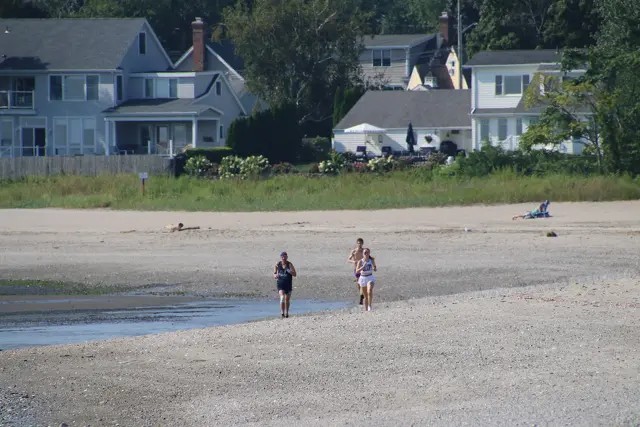
Heavy rain in Connecticut prompted swimming closures at several state park and municipal beaches after testing found elevated bacteria levels. Officials said runoff can carry pollutants into the water and that retesting is underway.
Closures spread after the rain
Several Connecticut beaches were closed for swimming on July 8 after heavy rain pushed bacteria levels above safe limits, cutting access at both state park beaches and municipal shorelines during peak summer season.
CT Insider reported closures at West Beach at Rocky Neck State Park in Niantic, Sherwood Island State Park in Westport, Silver Sands State Park in Milford, Chatfield Hollow State Park in Killingworth and Wharton Brook State Park in Wallingford. Municipal closures were also reported at Harvey's Beach in Old Saybrook and Clinton Town Beach.
The reporting said up to four inches of rain fell in parts of Connecticut on Tuesday, creating the kind of conditions that can quickly change water quality and force temporary swimming bans.
Stratford and East Haven add wider restrictions
The closures were not limited to individual beaches. In Stratford, the health department said all public beaches were closed for swimming until at least Friday, assuming no further weather events. CT Insider said the town was waiting on retesting before deciding whether to reopen.
In East Haven, the East Shore District Health Department closed all public beaches after the rainfall, including East Haven, Clark/Johnson, Stony Creek and Branford Point. That made the event a broader access issue for shoreline communities, not just a handful of isolated sites.
Why heavy rain matters
State officials said storm runoff can carry pollutants into swimming areas, including bacteria, metals, solids and oil or grease. That runoff can spike contamination levels enough to trigger closures even when beaches were open earlier in the week.
CT Insider’s explainer said this is a recurring Connecticut pattern after major rain: water that looks normal at the shoreline can still fail testing because runoff has washed material from roads, drains and surrounding areas into the water.
The state’s system puts the burden on testing before reopening. Connecticut Department of Energy and Environmental Protection monitors swimming water at state-managed sites, while local health departments oversee municipal beaches.
What happens next
Officials said retesting is underway at the affected beaches. Some sites could reopen once follow-up samples show bacteria levels have returned to safe limits, but reopening depends on the results and on whether more rain arrives.
That makes the next round of samples the immediate point of interest for beachgoers and local officials. If the water clears, beaches can reopen quickly; if not, the restrictions can last longer into the week.
The closures also underscore a familiar late-summer public health tradeoff in Connecticut: heavy rain can temporarily shut down popular swimming areas just as demand for beach access is highest.
The stakes for beachgoers
For residents and visitors, the closures mean a short-term loss of access at some of the state’s best-known beaches, including both shoreline state parks and smaller municipal beaches.
For health officials, the immediate goal is to keep swimmers out of water that may contain elevated bacteria after runoff. For towns and state agencies, the challenge is to balance public access with the need for reliable testing after every major rain event.
Revision note
Initial automated publication.