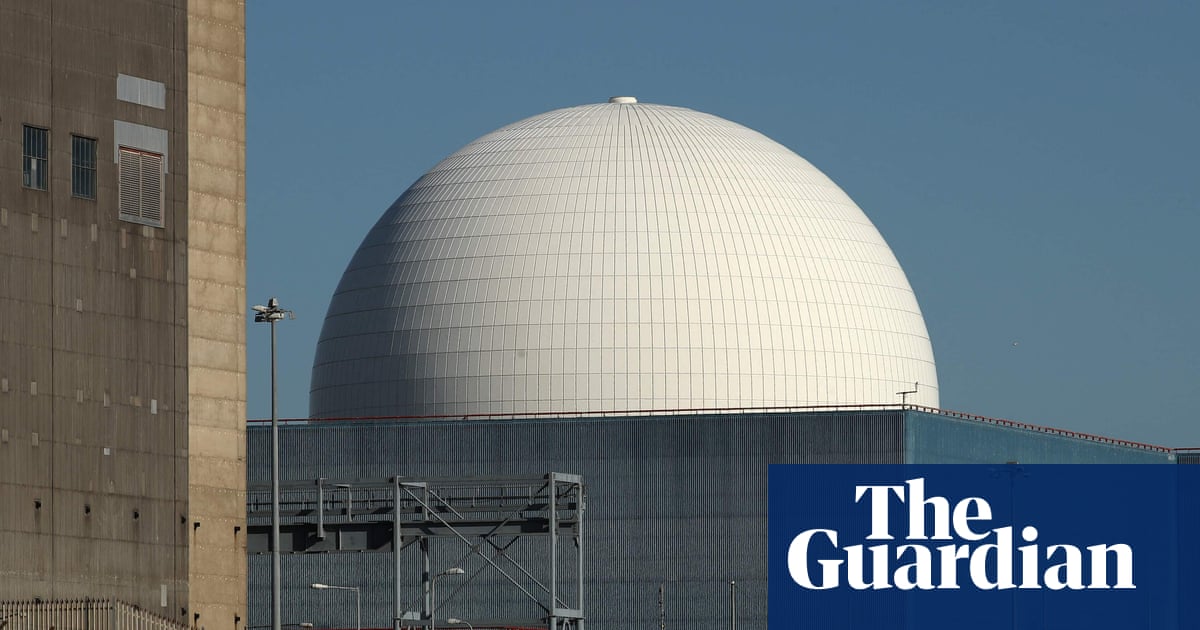
The UK government has approved a 20-year extension for Sizewell B, keeping the Suffolk nuclear plant operating until 2055 under a reported contract-for-difference deal.
The UK government has approved a 20-year life extension for Sizewell B, allowing the Suffolk nuclear plant to keep generating electricity until 2055.
The decision keeps one of Britain’s most important baseload power stations online for longer at a time when ministers are trying to reduce supply risk while new low-carbon generation is still being built.
Reporting on July 8 said the deal was agreed with EDF and Centrica and is structured as a contract for difference, a mechanism that guarantees a set electricity price. The reported strike price is £70.50 per megawatt-hour from 2035 to 2055.
Why Sizewell B matters
Sizewell B first synchronized with the grid in 1995 and was previously due to close in 2035.
It is the UK’s only pressurized water reactor and supplies about 3% of the country’s electricity, enough to power roughly 2.5 million homes. Keeping it in service for another two decades gives the government more room to manage the transition to newer nuclear and other low-carbon capacity.
Ministers have framed the extension as part of a broader energy-security and net-zero strategy. The argument is that existing reactors can help bridge the gap before new projects come online, rather than forcing the system to absorb the loss of steady generation too early.
That makes the Sizewell B decision more than a routine operating extension. It is part of a wider policy choice to preserve firm capacity while the UK waits for the next wave of infrastructure.
Reported terms of the deal
The arrangement reported by the Guardian, the Financial Times and The Times includes around £800 million of investment for maintenance and upgrades.
That spending is intended to help keep the reactor operating safely and reliably through the extended period. The reports do not yet give a full breakdown of how the money will be phased or exactly which works it will cover.
The contract-for-difference structure is central to the financial side of the deal. Under that model, the plant is given a guaranteed electricity price, which can reduce revenue risk for the operator but can also affect what bill payers ultimately pay.
The central unanswered question is the net impact on consumer bills over time. The reports make clear that the arrangement shifts some long-term cost and performance risk into the next phase of Sizewell B’s life.
Who stands to gain, and who carries the risk
EDF and Centrica are the key commercial parties in the reported deal, while the government is using the extension to strengthen the UK’s near-term energy position.
For ministers, the benefit is straightforward: keeping a large nuclear plant online helps reduce the chance of a supply gap before replacement capacity is available.
For EDF, the extension allows the station to keep producing revenue well beyond the original closure date. For Centrica, the deal ties the station’s future to a long-term commercial structure that depends on continued operation and maintenance.
The risk sits in several places. Sizewell B must continue to meet safety and maintenance requirements to stay in service, the plant must justify the expected £800 million of upkeep, and consumers may ultimately bear some of the cost through the contract mechanism.
Longer chronology
The new approval resets the plant’s timeline around a much longer operating life. Sizewell B began running in 1995, was expected to close in 2035, and is now expected to remain online for another 20 years beyond that.
That chronology matters because it shows how UK nuclear policy is evolving. Instead of relying only on new-build projects, the government is also trying to stretch the life of existing assets that are already connected to the grid.
The separate Sizewell C project remains in development, and the extension for Sizewell B buys time while that wider buildout continues. It also reduces pressure on the system if new projects face delays, which is a persistent risk in large infrastructure.
What remains unclear
The main open question is the full set of official deal terms. Reporting has set out the strike price, the extension period and the approximate investment figure, but the government has not yet publicly broken out every implementation detail in the material reviewed here.
It is also not yet clear how the maintenance package will be split across different works, or how regulators will sequence any required milestones against the 2055 target.
That leaves the story in a strong but still incomplete position. The core policy choice is clear, but the detailed public accounting of cost, timing and oversight still needs to follow.
What happens next
The next developments to watch are the formal government or EDF statement, any detailed schedule for the reported £800 million investment, and further explanation of how the contract-for-difference will affect long-run electricity costs.
Safety and maintenance remain the practical constraints. Sizewell B can stay online only if it continues to meet the standards required for operation over the extended period.
For now, the approval gives the UK an extra 20 years of large-scale nuclear generation from a plant that has already been part of the grid for three decades. It also postpones, rather than removes, the question of how the country replaces that capacity in the future.
Revision note
Initial automated publication.