India unveiled its first domestically made EXIM shipping container on July 3, with A.P. Moller-Maersk reportedly ordering 1,000 units as the government pushes domestic container manufacturing.
India unveiled its first domestically manufactured EXIM-grade shipping container on July 3, 2026, a development the government is presenting as part of a wider push for maritime self-reliance.
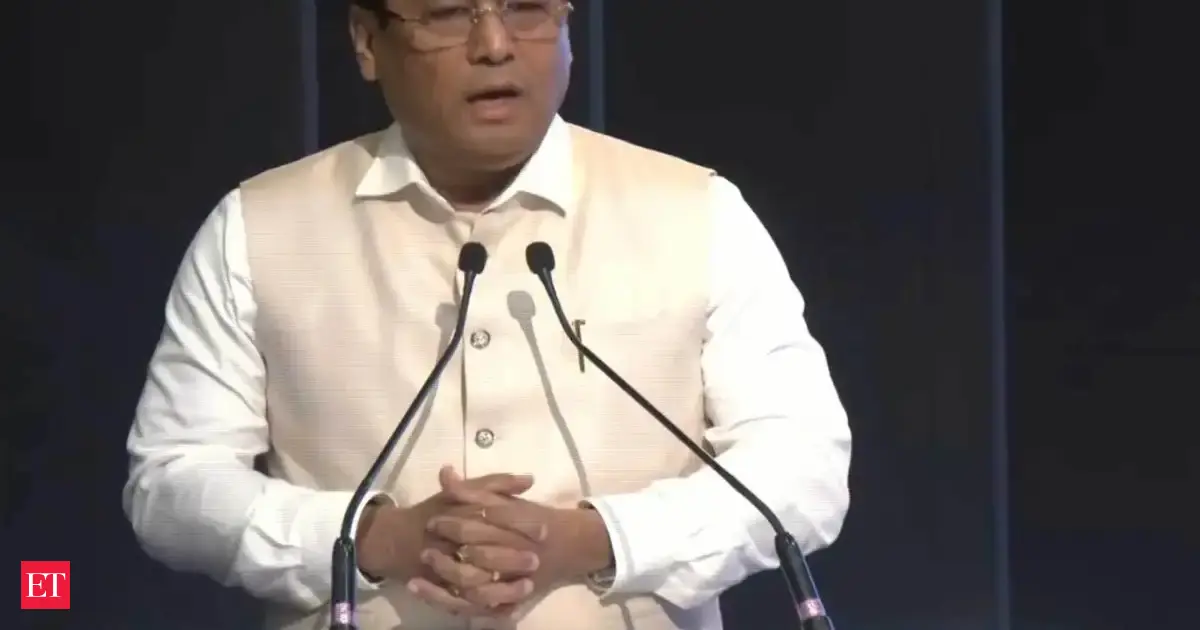
Union Shipping Minister Sarbananda Sonowal led the launch event. According to the reporting, A.P. Moller-Maersk also placed an order for 1,000 India-made shipping containers at the same event, giving the announcement an immediate commercial dimension.
The launch matters because shipping containers sit at the center of export logistics, import flows and supply-chain resilience. India has long relied heavily on imported containers, so even an early domestic manufacturing milestone carries policy and industrial significance.
The launch and the reported order
The story emerged from Indian reporting on July 3. The Times of India reported that India had unveiled its first domestically manufactured EXIM shipping container and that Maersk ordered 1,000 of them.
The Economic Times separately reported that Sonowal said the container manufacturing push aims to increase domestic capacity tenfold, to 7.5 lakh containers a year. That report also said the government is backing the sector with capital assistance, operating incentives, research, testing and technology development support.
Economic Times said the policy framework was tied to the Container Manufacturing Promotion Scheme, which it said was announced in Budget 2026. That places the launch inside a broader industrial strategy rather than treating it as a one-off showcase.
Why the policy push matters
The government’s goal is to build a stronger domestic base for a product that is critical to trade. Containers are a basic but essential part of global shipping, and shortages or import dependence can affect exporters, carriers and logistics operators.
A domestic manufacturing base could reduce exposure to external supply disruptions and support India’s broader Make in India agenda. It could also create a new industrial segment with export potential if production scales beyond local demand.
The reported Maersk order is important in that context. A global carrier placing an order for India-made containers suggests the market may be willing to absorb domestic supply, not just tolerate it.
Who is involved
The key public figures in the launch are Sarbananda Sonowal and the Ministry of Ports, Shipping and Waterways. The commercial side of the story centers on A.P. Moller-Maersk.
Economic Times also named DCM Shriram Group in connection with the order context, but the reporting reviewed did not fully clarify the manufacturing chain, the exact contract structure or whether the order was formally finalized on the spot.
That distinction matters. A launch-day order announcement is a strong signal, but it is different from a detailed procurement contract with publicly disclosed delivery terms.
What is still unclear
Several open questions remain. The reporting did not clearly identify which Indian manufacturer built the first EXIM container.
It is also not yet clear whether Maersk’s 1,000-container commitment reflects a signed purchase agreement or an order announced at the event. The delivery timeline has not been confirmed either.
Those details will determine how quickly the policy announcement turns into production output and actual shipment capacity.
What comes next
The next developments to watch are whether Maersk or the manufacturer issues a direct statement, whether the Ministry of Ports, Shipping and Waterways publishes an official release, and whether more details emerge on plant location and delivery schedules.
Further reporting could also show whether the scheme draws additional orders from other carriers or logistics companies. If it does, the July 3 launch would look less like a symbolic first unit and more like the start of a broader domestic manufacturing ramp-up.
Revision note
Initial automated publication.