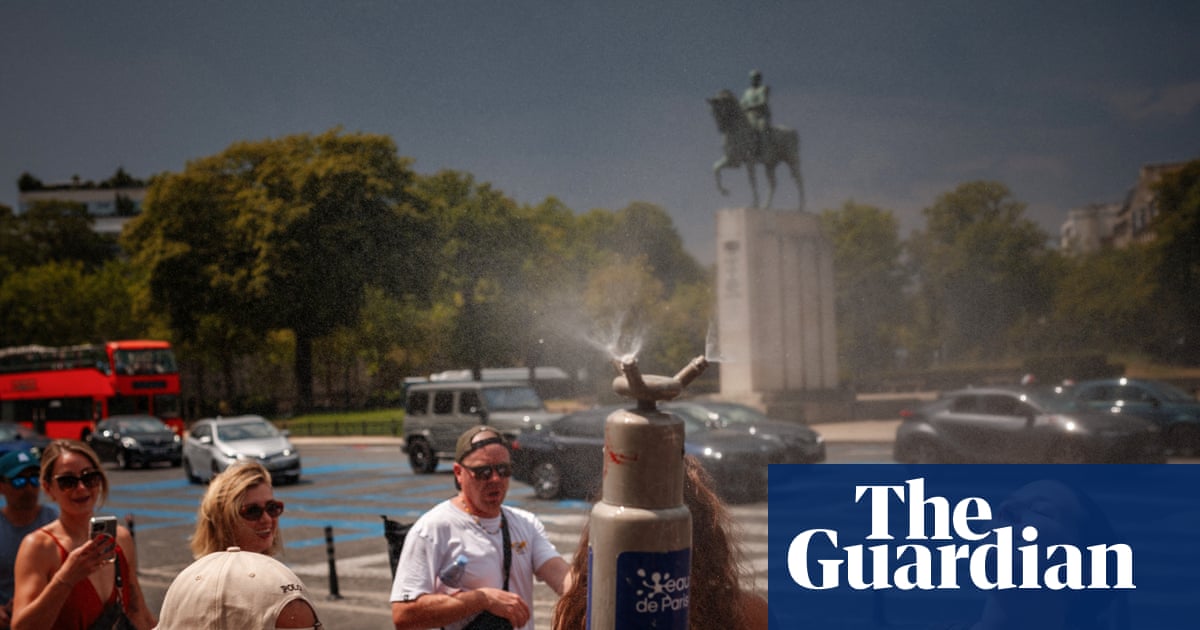
Spain and France are facing another spell of extreme heat just days after a late-June heatwave that officials and reporting say caused about 2,000 excess deaths across the two countries. Spain’s weather agency says temperatures could reach 44C in parts of the southeast, while France is still processing provisional mortality figures and emergency-service strain from the previous heat.
Spain and France are heading into another period of extreme heat just days after a late-June heatwave that officials and reporting say caused about 2,000 excess deaths across the two countries.
Spain’s state meteorological agency, Aemet, said a mass of dry, very hot air will push temperatures higher across much of the country from Saturday, with 42C to 44C possible in parts of southeastern Spain on Tuesday.
Aemet spokesman Rubén del Campo said temperatures should begin rising over the weekend and that another heatwave could not be ruled out.
The warning lands after a June that Aemet said was Spain’s second-warmest on record, with temperatures 3.2C above normal and exceeded only by June 2025.
Spain’s June toll
Spain’s MoMo mortality-monitoring system recorded 1,029 excess deaths linked to high temperatures in June, according to reporting cited by The Guardian and El País.
That figure has become one of the clearest signs that repeated heat events are already translating into measurable mortality in southern Europe.
The main risks remain concentrated among older adults and people with underlying health conditions, especially when high temperatures persist for several days.
France’s provisional estimate
In France, Santé Publique France issued a provisional estimate of around 1,000 excess deaths from the late-June heatwave.
Reporting from Le Monde and El País said about 85% of those deaths were among people aged 65 and over.
The estimate covered June 24 to June 28 in reporting cited by The Guardian, and it was based on electronic death certificates, meaning the total could still change as more data are processed.
Hospitals, emergency services and fire risk
French hospitals and emergency services reported heavier demand during the June heatwave, with Le Monde describing hospitals at a tipping point after seven days of heat.
Health services also reported more heat-related calls and admissions, adding pressure to already strained local systems.
Officials said the public-safety impacts did not stop at medical care.
French interior minister Laurent Nuñez said three wildfires, including two near Marseille, had burned a combined 1,210 hectares.
Sports and youth minister Marina Ferrari said drownings had risen to more than 90 since June 19, according to reporting cited by The Guardian.
Why this matters now
The back-to-back heat episodes underline how quickly extreme temperatures are becoming a repeated public-health emergency in southern Europe.
The danger is not just the forecast peak temperature. Prolonged heat raises the risk of dehydration, heatstroke and cardiovascular stress, while also worsening the strain on hospitals, ambulance services and fire crews.
France is particularly vulnerable in many communities because homes, schools and care settings often have limited air-conditioning coverage, leaving people with fewer ways to stay safe during long heat spells.
What officials are watching next
The immediate question is how intense the new hot spell becomes and whether Aemet formally classifies it as a heatwave in its next bulletin.
In France, further mortality updates are likely as more late-June death certificates are processed, and the provisional toll could rise.
Authorities in both countries are also watching for additional fire activity, local emergency measures and more strain on health systems as temperatures climb again.
The renewed warnings suggest the region is entering another fast-moving stretch of summer risk, with public-health agencies still counting the toll of the last heatwave even as the next one approaches.
Revision note
Initial automated publication.