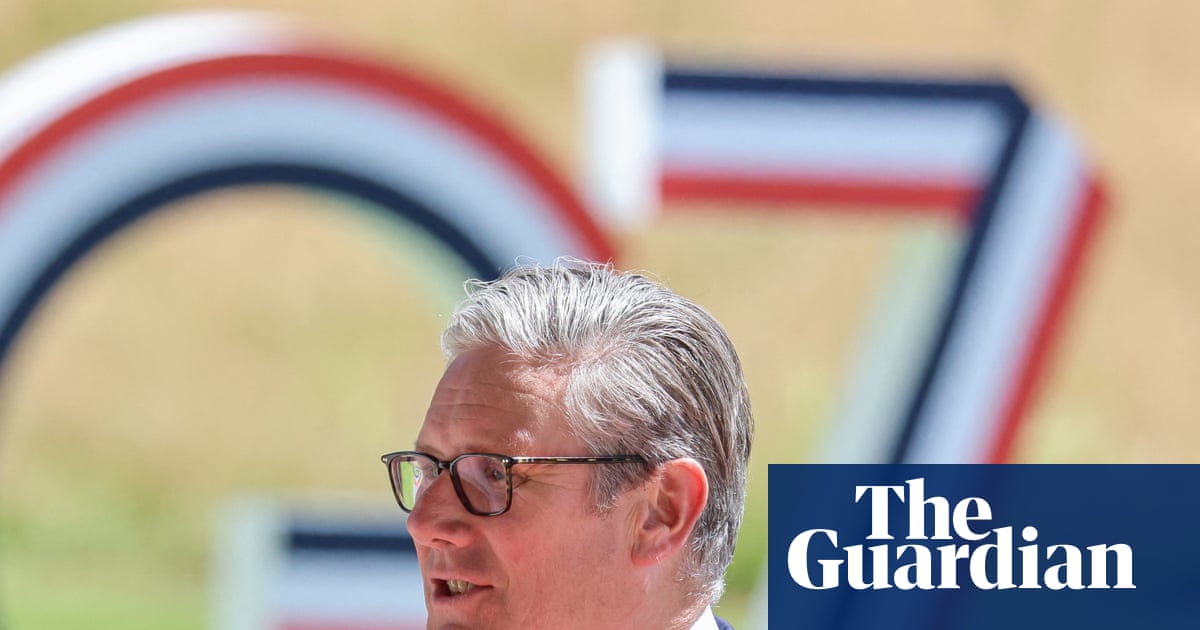
Keir Starmer said at the G7 summit that Britain will expand sanctions on Russia, targeting financial networks and more than 600 shadow-fleet vessels, while also providing £210 million to support Ukraine’s nuclear energy sector.
G7 announcement
Keir Starmer said at the G7 summit in Évian-les-Bains, France, that the UK will impose new sanctions on Russia and provide £210 million over two years to support Ukraine’s nuclear energy sector.
The announcement combines two pressure points on Moscow: tighter action against the networks that help finance and supply Russia’s war effort, and new support for one of Ukraine’s most important sources of electricity.
Starmer said the sanctions will target Russian financial networks, along with vessels linked to Russia’s shadow oil and liquefied natural gas fleet. Officials said the shipping measures will extend to more than 600 ships.
The package also targets a Russian state-linked network accused of covert procurement of Western technology for Russia’s military, as well as suppliers and intermediaries that help move money around the world.
Pressure on Russia’s shadow fleet
The shadow-fleet element extends a campaign focused on tankers and other ships used to move Russian energy exports outside the mainstream Western trading system.
The timing follows a recent enforcement move by British authorities, who detained a tanker believed to be linked to Russia’s shadow fleet in the English Channel. That action provided part of the backdrop for the latest sanctions push.
The UK has increasingly treated the shadow fleet as both an economic and enforcement problem. The ships help carry oil and LNG, while also creating headaches for insurers, regulators and maritime authorities trying to track illicit trade.
Starmer’s announcement signals that London wants to keep pressure on the logistics and finance channels that support Russia’s war economy, not just the frontline trade in oil itself.
Support for Ukraine’s nuclear sector
Alongside the sanctions, Starmer said Britain will provide £210 million over two years to support Ukraine’s nuclear energy sector through future winters.
The support is meant to help keep Ukraine’s nuclear plants operating after repeated Russian attacks on the country’s power infrastructure have strained the electricity system.
Officials said UK Export Finance will back an investment in Urenco, which will supply enriched uranium to Energoatom. That makes the package more than a simple cash transfer: it is also aimed at securing the fuel supply chain behind Ukraine’s nuclear generation.
The Guardian reported that the deal was agreed during Starmer’s meeting with Volodymyr Zelenskyy in Downing Street the previous week. The public announcement adds detail, but formal paperwork and implementation steps are still expected.
Ukraine’s nuclear sector remains strategically important because it is one of the country’s most reliable electricity sources during wartime disruption. Keeping fuel moving into the system is central to limiting blackout risk and easing pressure on the wider grid.
Summit context and next steps
The G7 setting gives the announcement broader political weight, placing it within a wider Western effort to keep pressure on Russia while the war continues.
The same day’s reporting also pointed to further sanctions action elsewhere in Europe, underscoring that the UK move sits inside a broader allied pressure campaign rather than standing alone.
What remains to be clarified is the exact shape of the formal UK sanctions package once legal instruments and detailed listings are published. The £210 million support plan may also be spelled out further in official documents, including the precise financing structure.
Ukraine and Energoatom may add operational detail on fuel deliveries and timing. For now, the message from London is clear: Britain is pairing tougher economic pressure on Russia with direct support for a critical part of Ukraine’s energy system.
Revision note
Initial automated publication.