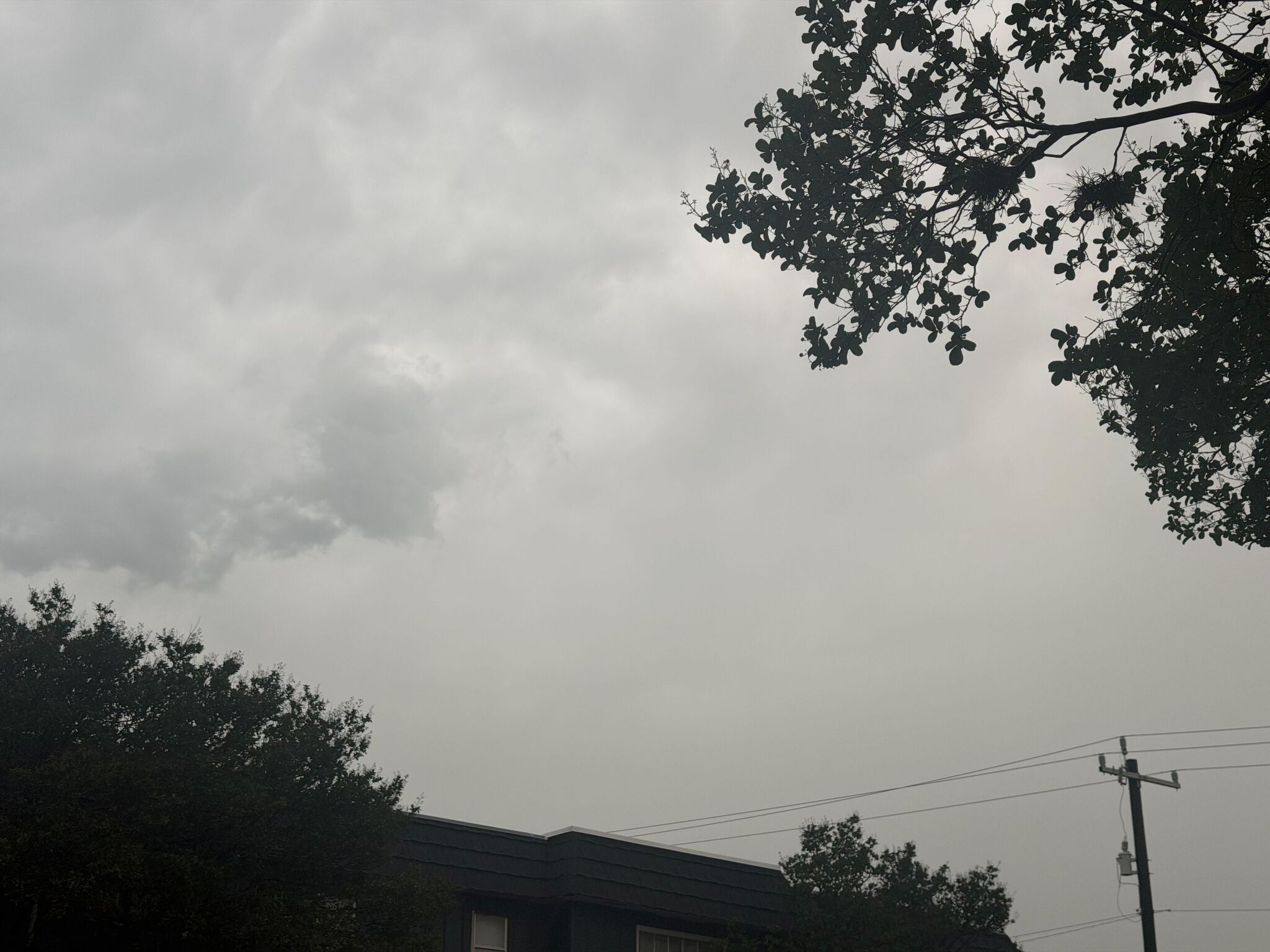
The National Weather Service has issued a Flood Watch for South-Central Texas, including San Antonio, as a summer cold front and tropical moisture raise the risk of heavy rain and flash flooding through Tuesday evening.
A Flood Watch is now in effect for San Antonio and much of South-Central Texas as a weak summer cold front meets tropical moisture and raises the risk of dangerous flash flooding through Tuesday evening.
The National Weather Service said the watch begins at 7 p.m. Sunday, June 14, and continues through 7 p.m. Tuesday, June 16. It covers the San Antonio metro area, Austin, the Interstate 35 corridor, the Texas Hill Country, the Edwards Plateau, the Rio Grande Plains and the Coastal Plains.
Forecasters warned that slow-moving thunderstorms could produce heavy rain in a short amount of time. Widespread rainfall of 1 to 3 inches is expected across the watch area, but isolated locations could receive up to 8 inches. At times, rainfall rates could exceed 2 to 3 inches per hour.
Officials said the setup could lead to life-threatening flooding and flash flooding, especially in flood-prone areas and at low-water crossings.
Forecast setup
Local forecasts showed tropical moisture building into the region first, followed by the arrival of the front. That combination is expected to keep rain chances elevated across South-Central Texas through Monday and Tuesday.
In San Antonio, rain chances were forecast to rise to around 80% on both Monday and Tuesday. Temperatures were expected to remain in the low 90s, with heat indexes possibly climbing above 100 degrees.
The threat is notable because the rain is expected to fall in bursts rather than as steady all-day precipitation. That increases the risk that drainage systems, roadways and creeks could be overwhelmed quickly if heavier bands stall over the same area.
Where the risk is highest
The watch area includes San Antonio, Austin and the Hill Country communities north and west of the metro area, along with a broad stretch of South-Central Texas. Forecasters said the exact placement of the heaviest rain band remains uncertain, which means some counties may see only scattered rainfall while others face repeated downpours.
The National Weather Service cautioned that the most serious impacts could come from thunderstorms that move slowly or repeatedly track over the same locations. That can turn otherwise manageable rainfall totals into dangerous flash flooding in a matter of hours.
What to watch next
The main question now is whether any counties or cities will be upgraded from watch to warning as storms develop. Forecasters are also watching where the heaviest rain sets up, and whether rainfall totals end up near the lower end of the forecast or closer to the isolated 8-inch scenarios.
Residents across the San Antonio region and nearby cities should monitor forecast updates, be ready for road closures, and avoid driving through flooded streets or low-water crossings if storms intensify overnight Monday into Tuesday.
Revision note
Initial automated publication.