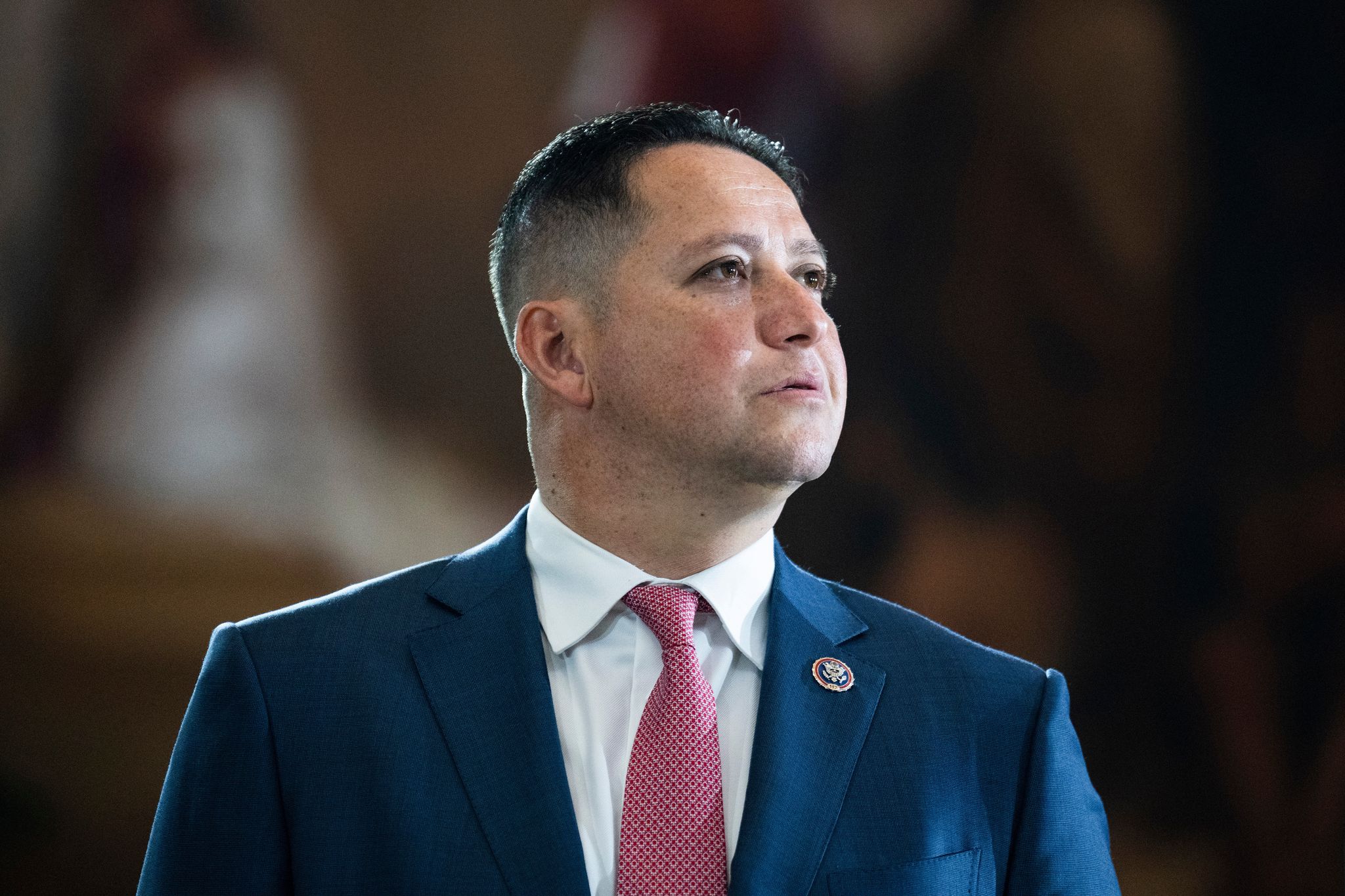
Texas Gov. Greg Abbott still has not scheduled a special election for the vacant 23rd Congressional District seat, leaving South Texas without a voting House member as New World screwworm cases spread through the region.
Texas Gov. Greg Abbott still has not scheduled a special election to fill the vacant 23rd Congressional District seat, leaving South Texas without a voting House member as New World screwworm cases spread through the region.
The delay matters in a district that stretches across a large swath of South Texas and border country, where agriculture, livestock movement and federal response issues are part of daily political life. It also comes at a moment when ranchers are already dealing with an outbreak that can damage cattle, goats, dogs, wildlife and the wider livestock economy.
Rep. Tony Gonzales resigned effective April 14, creating the vacancy. More than two months later, the governor had still not issued the proclamation needed to set a special election, according to reporting published June 10 by the Houston Chronicle.
The Chronicle said roughly 800,000 residents remain without representation in the House while the seat stays empty. No explanation from Abbott for the delay was included in the reporting, and no election date had been announced as of June 10.
A district waiting for a vote
The 23rd District is one of the state’s most geographically sprawling congressional seats, covering a long stretch of South Texas and border country. That makes the vacancy more than a symbolic problem: residents are without a voting member in Washington while major federal issues affecting the region continue to move.
The timing is especially notable because the regular November election is already approaching. If Abbott does not schedule a special election before then, the seat could remain vacant until the general election is certified and a winner is seated in January 2027.
That would leave constituents waiting through the remainder of the year for a replacement, even as the district faces immediate agricultural and economic pressure.
Screwworm outbreak spreads
The election delay is unfolding alongside a widening New World screwworm response in Texas and nearby states. AP reported June 8 that five cases had been confirmed across Texas and New Mexico, including three calves and a goat in Texas and a dog in New Mexico that had initially been counted as a Texas case.
Earlier reporting on June 3 and June 6 had already confirmed Texas cases and prompted broader alarm among agriculture officials. Texas and federal authorities have responded with quarantine zones, surveillance and releases of sterile flies meant to suppress the parasite.
The screwworm is a flesh-eating parasite that can infest livestock and, in rare cases, pets and humans. For ranchers, the risk is not just to individual animals but to herds, transport patterns and market confidence if the outbreak expands.
What officials are doing
Abbott has said state officials are working with the federal government to slow the spread. He has also pushed to speed construction of a sterile-fly facility near Edinburg, Texas, which AP reported the state may help finance in order to accelerate work on the $750 million project.
That facility is part of a larger containment strategy designed to reduce the parasite’s spread by releasing sterile flies into affected areas. The push reflects how seriously state officials are treating the outbreak, especially in cattle country near the border.
Texas also declared a statewide disaster as the infections became a more visible threat. The response has included movement restrictions and other containment steps aimed at keeping the parasite from gaining a firmer foothold.
Why the delay matters
The vacancy and the outbreak are separate problems, but they intersect in a district where agriculture is a major concern. Without a House member, South Texas constituents lack direct representation on issues tied to federal agriculture policy, emergency response and trade-sensitive livestock markets.
The outbreak could also pressure already tight cattle supplies and beef markets if it continues to spread or forces broader restrictions. Ranchers and livestock owners in the region are therefore watching two timelines at once: the pace of the parasite response and the governor’s decision on when voters can fill the seat.
Christian Menefee and Brandon Herrera are among the key political figures expected to be part of the campaign once the election is set, but the race cannot fully begin until Abbott issues the proclamation.
What comes next
Abbott could still call a special election before the November general election, but no date had been announced as of June 10. Until that happens, the district remains without a voting House member and the state’s response to the screwworm outbreak continues under separate emergency and agricultural channels.
The next developments to watch are whether Abbott sets the election soon, whether additional screwworm cases appear in Texas or neighboring states, and whether containment measures hold as the outbreak spreads beyond the original cluster.
For now, South Texas is facing an unusual combination of political vacancy and agricultural emergency, with neither problem yet resolved.
Revision note
Initial automated publication with expanded chronology and outbreak context.