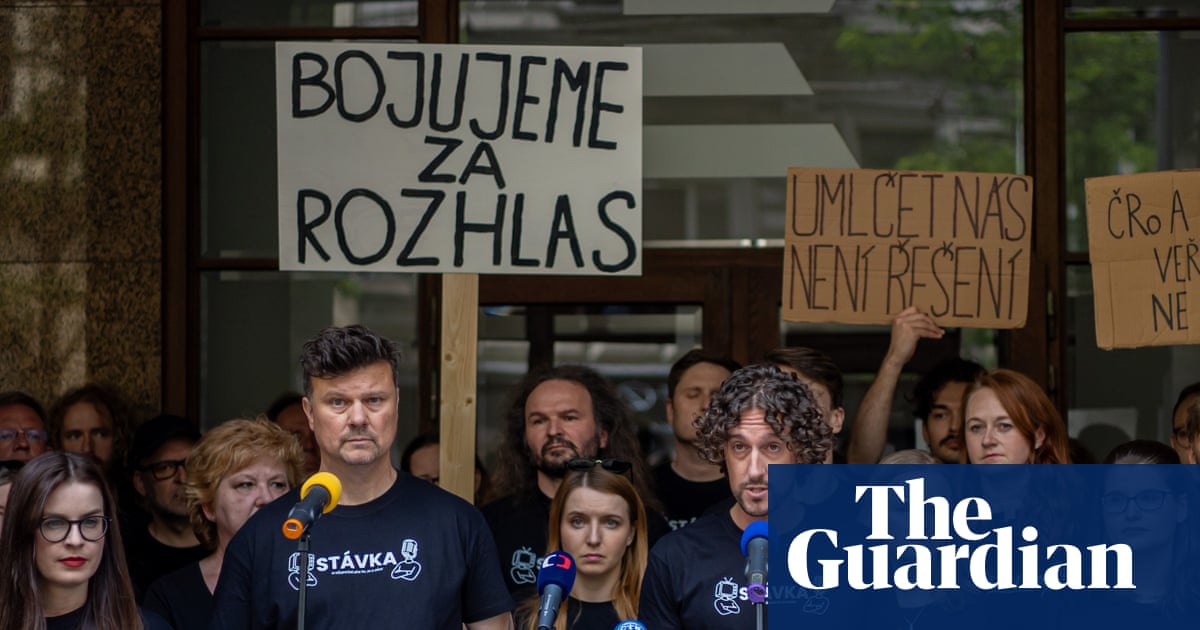
Employees at Czech Television and Czech Radio launched a 24-hour strike on June 22 after the Czech government advanced a plan to replace licence fees with state-budget funding. Broadcasters and strike leaders warn the change would weaken independence and cut budgets; the government says the financing shift would not affect editorial freedom.
Thousands of staff at Czech Television and Czech Radio walked out on June 22 in a 24-hour strike over a government plan to overhaul how the public broadcasters are funded.
The dispute centers on a proposal approved by the Czech government last week to end the broadcasters’ licence-fee model and replace it with annual funding from the state budget. Staff, unions and strike leaders say the change would leave the broadcasters more exposed to political pressure and weaker financially.
The strike followed months of warnings from newsroom staff and managers that the reform could reshape public service media in the Czech Republic. A large rally in Prague on June 21 drew thousands of demonstrators in support of the broadcasters before the industrial action began the next day.
Why staff walked out
Strike committee member Pavla Kubálková said the reforms were prepared without consultation and without guarantees for independence. Broadcasters have argued that direct budget funding would give governments too much leverage over institutions that are meant to operate independently.
According to reporting cited by the broadcasters, the new model would reduce their funding to roughly 2008 levels. Czech Radio says its annual budget could fall by about 14.3 million pounds, while Czech Television could lose about 35.8 million pounds.
Executives warn that the hit could translate into hundreds of layoffs and major cuts to programming. They say that would damage public access to independent news, regional coverage and other services provided by the state-funded outlets.
What the strike changed
Czech Television said the strike would affect all channels except its children's service, along with its websites, streaming platform and social media output. Czech Radio planned programming changes and on-air explanations during the protest.
Associated Press reported that the action also included a symbolic human chain around Czech Radio headquarters and brief broadcast disruptions. The strike was framed as a warning action, but it marked a clear escalation in the confrontation over funding.
Government response
Culture minister Oto Klempíř said in written comments that moving funding into the state budget would not change the broadcasters’ independence, legal status or editorial-freedom guarantees. Prime Minister Andrej Babiš said the broadcasters needed to save money.
That leaves the central political fight intact. The government says the measure is a financing reform, while critics say it is a structural threat to editorial autonomy. For public broadcasters, the concern is not only the size of the budget but who controls it.
What happens next
The final legislative timetable remains uncertain. It is not yet clear whether the government will alter the proposal before it reaches parliament or final approval.
Further developments will likely depend on whether the strike leads to additional disruptions, whether broadcaster leaders escalate industrial action, and whether opposition parties or EU institutions take a stronger public stance. For now, the walkout is the clearest sign yet of how deeply the funding overhaul has divided Czech public media.
Revision note
Initial automated publication with fuller chronology and context.