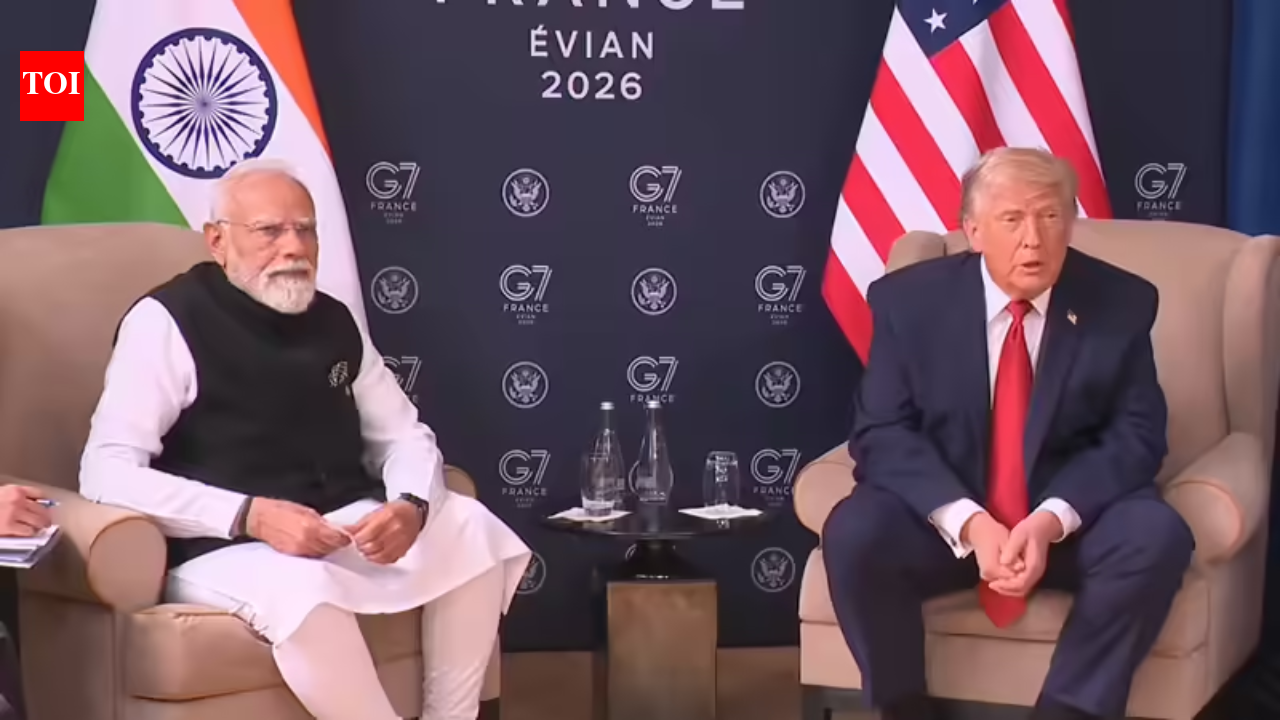
Donald Trump said the U.S. and India are very close to a trade deal after meeting Narendra Modi at the G7, while India said officials are working toward a balanced interim agreement and that talks are in the final stages.
Donald Trump said the U.S. and India are “very close” to a trade deal after meeting Narendra Modi at the G7 summit in France, signaling that the two sides are moving toward a near-term agreement after months of tariff and market-access negotiations.
India’s Ministry of External Affairs later said Modi and Trump had directed their officials to work toward a balanced, mutually beneficial and commercially meaningful agreement at the earliest. Indian officials then said significant progress had already been made on an interim pact and that the talks were in the final stages.
Next negotiating step
The next concrete milestone is a scheduled visit to New Delhi by U.S. Trade Representative Jamieson Greer on June 23-24, where he is expected to hold trade talks with Indian officials, including Commerce Minister Piyush Goyal and trade negotiator Rajesh Agrawal.
The talks are being framed as an interim or first-phase bilateral trade agreement rather than a completed comprehensive deal. That means the immediate question is whether the two governments can lock down a limited package or simply narrow the remaining gaps.
Why it matters
A deal could affect tariffs, market access and bilateral trade flows between the two countries. It would also be an early test of whether Washington and New Delhi can settle sensitive trade issues quickly enough to convert the political momentum from the G7 meeting into a signed agreement.
For now, there is no final pact. The clearest checkpoint is the June 23-24 New Delhi visit, when the parties are expected to either announce an interim agreement or leave only a few issues for a final round of talks.
Revision note
Updated with the latest verified progress and negotiation timeline.