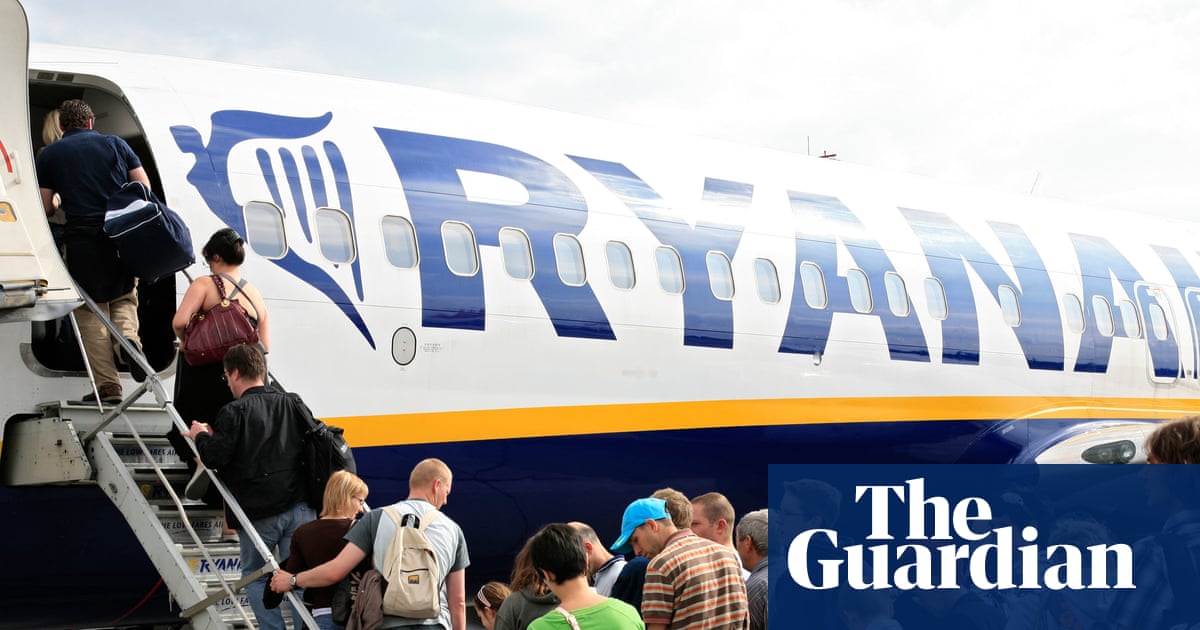
The UK Competition and Markets Authority has opened an investigation into Ryanair’s policy of charging parents to reserve seats next to their children. The regulator is examining whether the fee is an unfair term or hidden through drip pricing, while Ryanair says its policy is lawful and saves families money.
The UK Competition and Markets Authority has opened an investigation into Ryanair’s policy of charging parents to reserve seats next to their children, placing the airline under fresh consumer-law scrutiny.
The regulator said it is looking at whether the charge amounts to an unfair contract term and whether it is presented transparently during booking, or instead hidden from customers through drip pricing.
The investigation was announced on June 11, 2026, and is at an early stage. The CMA has not reached any conclusion.
Ryanair said its family seating policy fully complies with laws and regulations and argued that it saves families money. The airline also called the investigation bogus and said it looked forward to disproving the CMA’s claims.
What the CMA is examining
At the center of the case is Ryanair’s so-called mandatory family seat rule. Under the airline’s terms, at least one parent or guardian must sit with children aged 2 to 11.
According to reporting cited by the regulator, the associated seat fee is typically about £8 per flight and can apply on both the outbound and return legs. The CMA is examining whether that cost is unavoidable for families and whether customers see it clearly enough when they book.
The probe also covers seats for families with disabled children, according to reporting.
The regulator’s focus reflects its wider interest in upfront price disclosure and its powers to challenge unfair terms and pricing practices.
Why the case matters
For families, a small per-seat charge can become significant once it is applied across multiple passengers and both legs of a trip. That makes the issue larger than a single fee line in a booking flow.
Coverage cited by the regulator and reporters says Ryanair is understood to be the only major airline flying from the UK to impose this charge. The policy appears to apply across most of the airline’s UK routes.
Other airlines generally seat children with a parent or guardian without charging for an adult seat reservation, or place families together automatically at no extra cost.
That difference is central to the consumer case. The question is not only whether the fee is lawful, but also whether the way it is disclosed gives passengers a fair picture of the total cost before they book.
Ryanair’s response
Ryanair has framed the dispute as both legal and commercial. The airline says its policy is compliant and that families still benefit from lower overall prices.
The company has also pushed back on the idea that parents are being charged simply to sit beside their children. Ryanair says children are not charged to sit with a parent, while the CMA is treating the adult seat fee as an unavoidable cost tied to family seating.
That disagreement matters because it goes to the heart of how the policy is described in booking flows and in public debate.
What happens next
The investigation is new, and no enforcement outcome has been announced. The CMA may later decide whether to pursue action if it concludes the policy is unfair or insufficiently transparent.
The regulator could also broaden its scrutiny if it sees the case as raising wider concerns about airline fee practices.
For now, the dispute leaves families with children in the middle of a larger fight over airline pricing, consumer rights and how far airlines must go to disclose mandatory charges before customers book.
For Ryanair, the probe creates reputational and regulatory risk. For the CMA, it is another test of whether consumer law can be used to challenge fees that may look small at first glance but become more significant once a full journey is priced out.
Revision note
Expanded into a fuller multi-section article covering the probe, fee mechanics, stakes, response, and next steps.