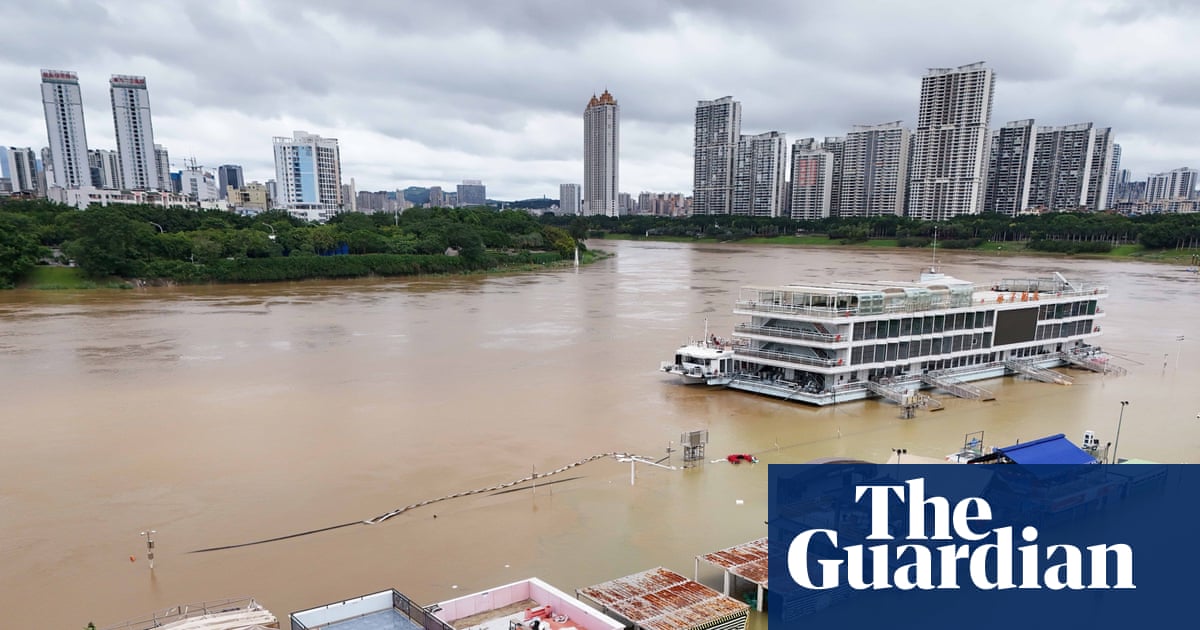
Typhoon Maysak flooded parts of Guangxi, leaving some residents stranded on rooftops in Nanning as rescuers used boats and inflatable craft to reach trapped people. The storm has also been linked to deaths, evacuations, snake escapes and tornado damage elsewhere in China.
Typhoon Maysak brought severe flooding to southern China on Friday, leaving some residents stranded on rooftops in Nanning, the capital of Guangxi, as emergency crews raced to reach trapped people.
The flooding in Nanning was the latest sign of how quickly conditions deteriorated as heavy rain from the storm moved through Guangxi. Reporting from wire services and state media described rapidly rising water, overflowing rivers and damaged infrastructure across multiple cities in the region.
Rooftop rescues in Nanning
The newest reports focused on Nanning, where floodwaters left people stuck on rooftops while rescuers moved in with boats and inflatable craft. The scene underlined the pace of the flooding and the difficulty of reaching residents once water levels climbed.
Earlier reporting said Maysak dumped as much as 280mm of rain in 12 hours in parts of Guangxi. In other flood-hit areas, rescuers used inflatable boats to reach trapped people as authorities tried to keep communications open with vehicles, boats and drones.
The wider toll in Guangxi
The storm has already caused significant harm in Guangxi. AP reported earlier that flooding linked to Maysak killed at least two people in the region and affected about 55,000 residents, with 48,000 evacuated.
China’s Ministry of Emergency Management said more than 1,000 rescuers were deployed, along with vehicles, boats and two drones. Officials also said rivers overflowed in Fangchenggang city, where crews used inflatable boats to reach trapped residents.
Later reporting from Xinhua and The Guardian pointed to a broader toll of 11 dead and 331 injured across the affected regions, with more than 4,855 houses damaged. The figures reflect different reporting windows and geographic scopes, but they show a fast-moving disaster still being assessed.
Secondary hazards beyond flooding
The storm also created public-safety risks beyond the floodwater itself. The Guardian reported that hundreds of snakes, including cobras, escaped from flooded breeding farms in Hengzhou, Guangxi, after the floodwaters overwhelmed the facilities.
Local authorities responded by increasing anti-venom supplies and opening a fast-track treatment channel for snakebite patients, according to that report. That added another urgent health concern for already flood-hit communities.
Severe weather farther inland
The same broader weather pattern also caused deadly damage in central China. AP reported that separate tornadoes and storms in Hubei killed at least 11 people, injured more than 330 and damaged more than 4,800 homes.
That made Maysak part of a wider severe-weather outbreak affecting multiple provinces at once, with flooding in the south and destructive storms farther inland.
What officials are still checking
Authorities still need to confirm how many people remain stranded or have been newly rescued in Nanning, whether the Guangxi death toll has risen further, and whether any snakebite injuries have been formally reported.
They are also monitoring rivers, basins and reservoirs for additional flooding, including whether water levels are still rising in any parts of Guangxi. AP reported that Guangxi later issued its highest flood alert and that water levels at dozens of stations rose above warning marks.
For now, the focus remains on rescue operations, damage assessments and flood warnings as officials continue to verify the full impact of Maysak.
Revision note
Expanded initial publication with full chronology, Guangxi impact, secondary hazards, inland storms, and open questions.