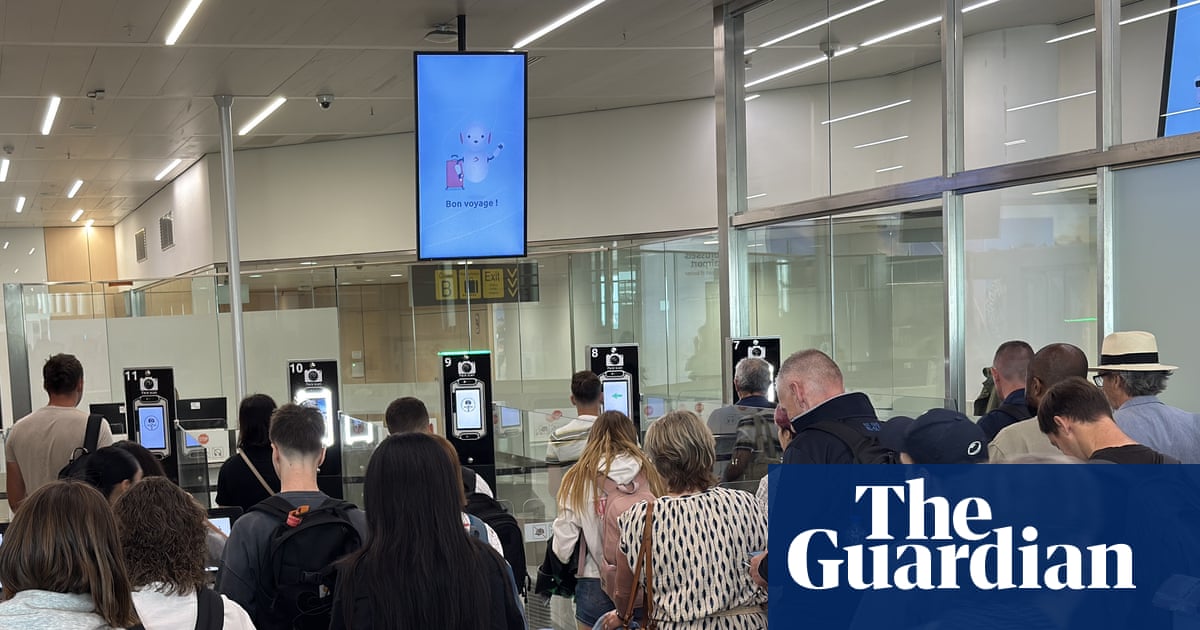
The EU’s Entry/Exit System has been fully operational since April 10, 2026, and is now affecting summer travel for many non-EU visitors, including UK citizens. Airlines and airport groups are urging the European Commission to allow temporary suspensions during the holiday peak as delays build at some border points.
The European Union’s new Entry/Exit System is now fully operational, and the summer travel peak is putting it under strain.
Airlines and airport groups say the checks are already creating long queues at some busy border points, and they want temporary flexibility during July and August if border-control capacity is exceeded.
The issue matters most for non-EU travellers, including many UK citizens, who must register under the system when they enter the Schengen area for a short stay.
What the new system does
The Entry/Exit System, or EES, is an automated border system for non-EU nationals travelling for a short stay in 29 European countries.
It replaces passport stamping with digital registration.
On first entry, travellers are recorded with travel document data, fingerprints, captured facial images, and the date and place of entry and exit.
The European Commission says the system is designed to help detect overstayers, irregular migration, fake or forged documents, and wider security risks.
The Commission says EES became fully operational on 10 April 2026.
How the rollout got here
The launch was not sudden. The Commission set 12 October 2025 as the date for the progressive start of EES operations before the system became fully operational on 10 April 2026.
That means the current dispute is not about whether the system exists. It is about how border agencies and transport operators handle the peak-season test.
The system also reflects a longer-term EU smart-borders plan, with the Commission arguing that automated and self-service controls should make border crossings more efficient over time.
Why airlines are pressing for a pause
The latest pressure came on 1 July, when ACI Europe, Airlines for Europe and the International Air Transport Association called on European Commission president Ursula von der Leyen to allow airports to suspend checks when border-control capacity is exceeded during July and August.
The industry groups say queues are reaching up to five hours at peak times.
They also say some flights are leaving with empty seats or are being delayed while passengers are still in line.
Their complaint is that the rollout is colliding with the busiest travel period of the year, when there is little room for processing bottlenecks.
Where the delays are showing up
Reporting has pointed to long delays in places including Lisbon, Milan and Athens.
Those examples suggest the problem is not confined to one airport or one country.
Instead, the rollout appears uneven, with some crossings coping better than others depending on staffing, lane capacity and the local pace of implementation.
That unevenness is why the industry wants a temporary pause option during the busiest weeks of the summer, rather than a single fixed rule for every border point.
What local authorities have already done
The pressure is not only theoretical.
AP reported in May that extra EES-related checks were temporarily suspended at the Port of Dover after long delays for ferry passengers.
That episode showed that authorities have already used local flexibility when queues became severe.
It also suggests member states may continue to decide ad hoc responses at congested border points, even if there is no wider summer suspension.
What travellers should expect
For most people, the immediate consequence is extra time at the border, especially on a first trip after the system has been introduced.
Holidaymakers should expect slower processing at some airports, ferry ports and land borders, particularly during peak travel periods.
The effect is likely to vary from one checkpoint to another. Some crossings may move smoothly, while others may face much longer waits if staff or lanes are stretched.
Travellers connecting to another flight, or using a busy holiday weekend crossing, are the most exposed to knock-on delays.
The policy question now
The central question is whether the European Commission, or the member states running border points, will grant broader summer suspensions or other temporary flexibilities.
The Commission has not said it will do so.
For now, the system remains in place, and the industry is arguing that the peak season is exposing a mismatch between the EU’s long-term border-tech plan and the reality of holiday travel.
What to watch next
The next developments to watch are any Commission response to the airline and airport letter, new queue reports from major hubs, and further local decisions at congested border points.
Another question is whether the summer peak produces broader operational changes beyond the ad hoc suspensions already seen at some crossings.
For travellers, the practical advice is simple: allow more time than usual, especially if you are flying through a busy airport or crossing at a peak holiday weekend.
Revision note
Initial automated publication.