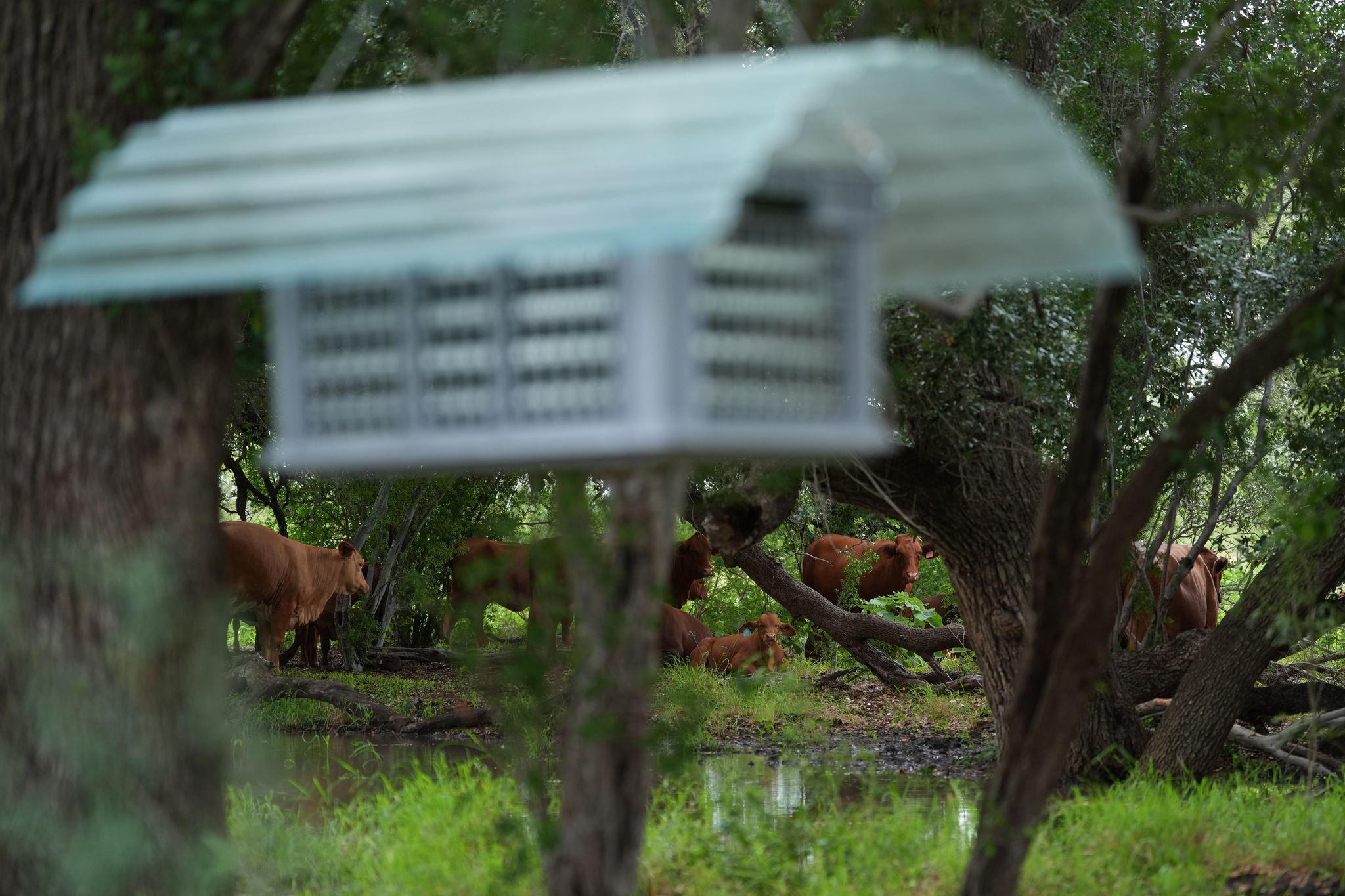
Texas says USDA veterinary-services funding will let the Texas Animal Health Commission hire 15 new staffers, including 10 field inspectors, to strengthen its screwworm response.
Texas says new federal funding will expand its response to the New World screwworm outbreak by allowing the Texas Animal Health Commission to hire 15 people, including 10 field inspectors.
Gov. Greg Abbott said the money comes through the U.S. Department of Agriculture’s veterinary-services division. He said the new positions will also include emergency-management and epidemiology staff, giving the state more capacity to inspect animals, trace possible spread and respond to new reports.
Abbott said the added staffing is intended to protect Texas livestock producers and the state’s agricultural economy. The announcement comes as officials continue to treat the outbreak as a live containment problem rather than a closed event.
A fast-moving outbreak
The first Texas case was confirmed on June 3 in a calf in Zavala County, according to reporting and USDA confirmation. By June 15, reporting said Texas cases had risen to 11 across six counties: Zavala, La Salle, Edwards, Gillespie, Tom Green and Sutton.
That same reporting said a New World screwworm case had also been confirmed in Lea County, New Mexico, involving a dog. Houston Chronicle reporting on June 17 said there were 12 confirmed U.S. animal cases at the time of publication, 11 of them in Texas.
Texas Animal Health Commission had already established Infested Zone 06 and imposed movement restrictions, according to local reporting. USDA and state officials have also used surveillance, quarantine and sterile-fly response measures in an effort to contain the outbreak.
Why more inspectors matter
New World screwworm is a parasitic fly whose larvae infest wounds on warm-blooded animals. The pest was largely eradicated from the United States decades ago, but it has re-emerged after spreading north through Mexico and into Texas in June 2026.
That history is why the staffing announcement matters. More inspectors can help officials identify suspect animals sooner, enforce quarantine rules and trace movement patterns that could carry the pest into new herds or new counties.
Abbott said the extra personnel will strengthen Texas’ ability to detect, trace and contain the pest. He said the state is trying to respond in a way that protects both livestock health and the wider agricultural economy.
What Texas still has to prove
The open question is whether the new hiring plan is enough if the outbreak keeps expanding. Reporting does not yet show how quickly Texas can recruit and deploy the 15 staffers, or how the positions will be split between field work and coordination roles.
Officials are also still watching for the next phase of the response from USDA and the state. The key items are an official release with the funding amount and hiring timeline, plus updated case counts, quarantine changes and any shifts in sterile-fly operations.
Other states could also respond if the outbreak spreads further. If animal cases continue to rise, import restrictions or extra screening for animals from affected areas may become more likely.
Revision note
Initial automated publication.