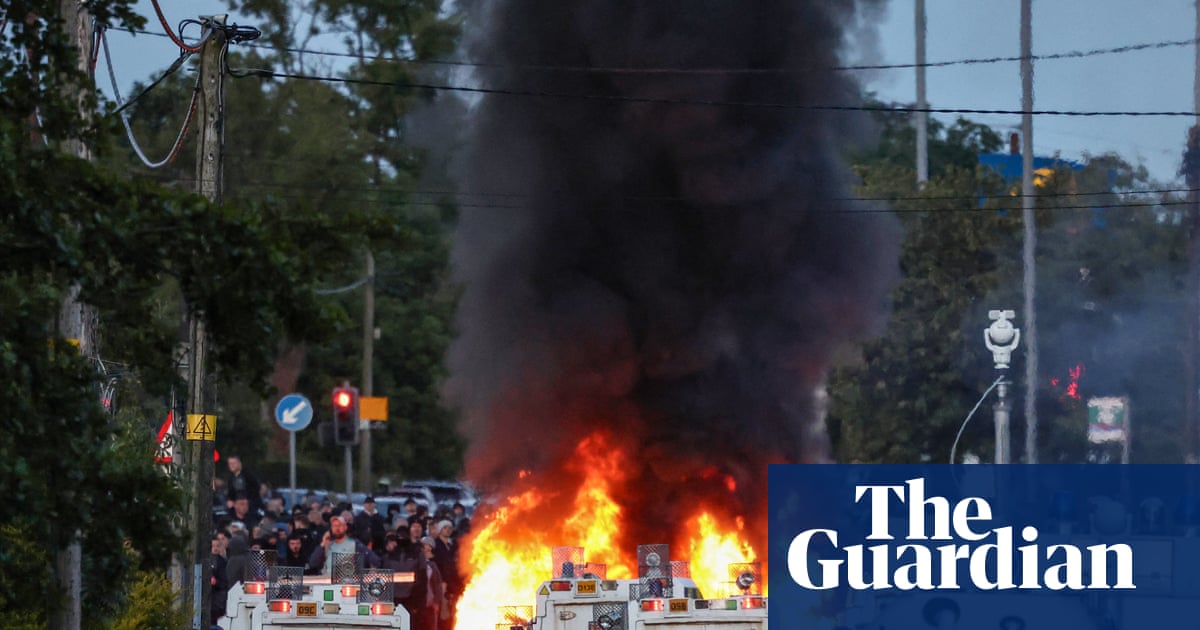
Police in Northern Ireland say arrests have risen to 19 after two nights of rioting in Belfast, while Southampton courts are dealing with sentencing fallout from violent protests outside a police station.
Two outbreaks of disorder in Belfast and Southampton have become a wider argument about race, immigration and policing in the UK. The cases are separate, but together they have drawn scrutiny to how quickly local unrest can spread, how police respond, and how courts are now handling the fallout.
In Northern Ireland, police said arrests had risen to 19 after two nights of rioting. In Southampton, the disorder has moved into the courts, where defendants are being sentenced after violent protests outside a police station and later attacks on officers.
Both episodes have left injured police officers, targeted residents and fresh questions about whether authorities moved quickly enough to protect vulnerable people and contain the violence.
Belfast: a stabbing, then rioting
The Belfast unrest followed a stabbing in which Stephen Ogilvie was seriously injured. Police later said a Sudanese refugee had been charged with attempted murder.
What began as anger over that case escalated into masked rioters burning vehicles and houses, throwing rocks and petrol bombs at police, and targeting homes. Officers responded with water cannon and plastic bullets as they tried to hold back the disorder.
Police said 12 officers were injured in the unrest. One of those arrested was a 16-year-old boy.
The violence has also sharpened questions about what police knew before the riots began. The Guardian reported that police had been warned for months about some of the addresses later targeted in Belfast, including properties linked to anti-immigration activists.
That reporting has fed criticism of local policing and of the wider atmosphere around the disorder. At the same time, police have said they have no evidence that the violence was orchestrated.
How Belfast became a flashpoint
The Belfast riots have been described in reporting as part of a wider struggle over race, immigration and policing. The immediate trigger was a violent crime, but the targets and tactics showed that the unrest quickly widened beyond one incident.
The reporting also points to concern about loyalist paramilitary influence, though police have not said they have evidence of orchestration. That leaves an important unresolved question: whether the violence was mainly spontaneous, or whether it drew strength from organized networks and long-running local tensions.
Another issue now hanging over Belfast is whether the people and places that were flagged in advance were protected adequately. The fact that some addresses were reportedly warned about months earlier is likely to remain central to any later scrutiny.
For residents, the immediate stakes are straightforward: safety, protection from intimidation and a sense that the state is able to respond before street violence spreads further.
Southampton: protests move from street anger to sentencing
In Southampton, the disorder has entered a different phase. Prosecutor Siobhan Linsley told court that about 1,000 people gathered outside the city’s central police station on June 2 after police bodycam footage was released.
That gathering followed the murder case of Henry Nowak and the jailing of Vickrum Digwa, who had made false racism allegations. According to court evidence, some of the protesters later moved toward the wrong address in St Denys.
There, police came under sustained attack from bricks, chairs, bins and other projectiles. The Guardian reported that 11 police officers and a police dog were injured.
The latest court fallout has already produced prison terms for at least two defendants, including Taylor Grundy and Dillon Crawford.
Why Southampton matters
Southampton shows how quickly a protest can change shape once crowd anger hardens into violence. What started outside a police station became, by court account, a broader confrontation in which officers were attacked and injuries followed.
The case also sits inside the same larger argument seen in Belfast: race, immigration, policing and trust in public institutions. The difference is that Southampton is now mainly a question of accountability in court, rather than live street disorder.
That makes the legal process important not just for punishment but for deterrence. The court cases will shape whether the disorder is treated as an isolated explosion or as part of a recurring pattern of politically charged violence.
The wider political pressure
The two episodes are local, but the political pressure is national. The reporting around both cities places race, immigration and policing at the center of the debate, and those themes are likely to keep driving public argument as more details emerge.
For police, the challenge is credibility as much as capacity. In Belfast, officers were attacked amid claims that some targets had been warned about in advance. In Southampton, police were injured in a disorder case that has now moved into sentencing.
For courts, the question is how far to go in punishment and deterrence while the underlying tensions remain unresolved. The current sentences in Southampton are only part of that picture. Belfast still has more arrests and possible charges ahead.
There is also the continuing issue of online incitement and local grievance. The research for both cases leaves open how much disorder was driven by social media, how much by existing community tensions, and how much by direct mobilization on the ground.
What happens next
More Belfast arrests are possible as police continue identifying people involved in the rioting. Officials may also face renewed demands to explain whether warnings about targeted addresses were acted on effectively.
In Southampton, more hearings and further sentences are likely as the disorder cases continue through the courts. Questions about the chain of events, including the release of bodycam footage and the movement to the wrong address, are likely to remain part of that process.
Across both cities, the next stage is about accountability. Police will be judged on protection and response. Courts will be judged on sentencing. And political leaders will keep facing pressure over immigration, race and the conditions that allowed the violence to take hold.
For now, Belfast and Southampton stand as two different versions of the same problem: localized disorder that quickly became a national test of policing, public safety and trust.
Revision note
Initial automated publication.